ENG 151 · LECTURE 07 · READING BOOKLET
Electricity, chemistry and a connected world
Industry, everyday life and military power across Europe and Asia, approximately 1850–1914.
Read continuously or use the contents. Select any image to view it at full size.
1. A refrigerator with no plug
Look closely at the advertisement. It promises refrigeration to rural homes, places where an electrical connection could not simply be assumed. The IcyBall belongs to the 1920s, a little later than our main period. Yet it gives us a useful starting question: how could adding heat help keep food cold? A familiar need can be met by a technical arrangement very different from the one we use today.
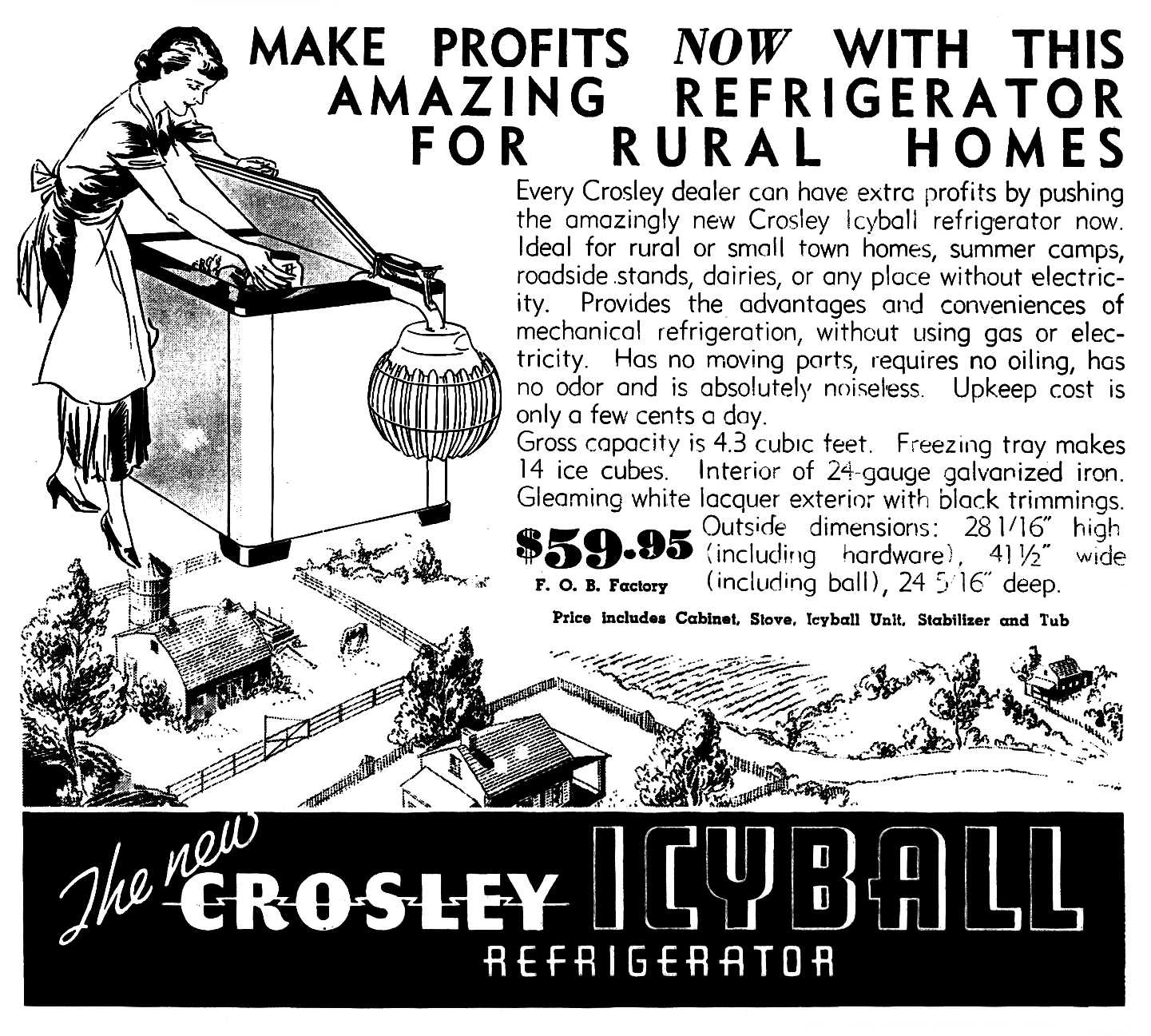
The device used a heat-driven absorption cycle. Heating separated ammonia from water. After the apparatus cooled, evaporation of liquid ammonia absorbed heat from the space being refrigerated, while water absorbed the returning ammonia vapor. We will return to this principle when we discuss food supply. For now, notice that cooling requires an energy source and a way to move heat. An electrical socket is only one possible part of that arrangement.
Our main period is approximately 1850–1914. Steel, industrial chemistry, electrical power and rapid communication changed what people could make and how they lived. We will follow the connections between the laboratory, the factory, the city and the state. The useful question is what allows an invention to become dependable in ordinary use.
Further reading: Smithsonian: IcyBall; IcyBall refrigeration.
2. An industrial world with new connections
In the previous lecture we followed textiles, steam engines, iron and factory labor. None of these disappeared when the Second Industrial Revolution began. Coal continued to supply enormous amounts of energy, steam engines continued to work, and many people still depended on agricultural or manual labor. The new phase changed the range and organization of industry rather than replacing the old world overnight.
Steel could support heavy machinery and major structures. Chemical production supplied dyes, fertilizers, medicines and explosives. Electricity offered a flexible way to distribute energy to lamps and motors. Telegraphs and telephones connected distant decisions. Each of these changes relied on other activities: mines supplied materials, transport moved them, finance supported construction, and workers operated and repaired the equipment.
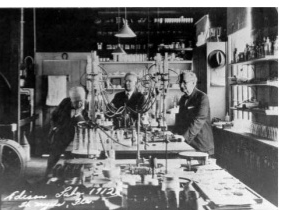
The laboratory photograph helps us think about organized invention. Instruments and experiments require space, equipment and people who can repeat and improve a procedure. Industrial research created continuing employment for specialists. Universities and technical schools trained people who could move between scientific investigation and practical problems. At the same time, a skilled mechanic could solve problems that a scientific paper did not address. Industrial development depended on exchange between these kinds of knowledge.
Further reading: National Park Service: Edison.
3. Geology, evolution and the place of humanity
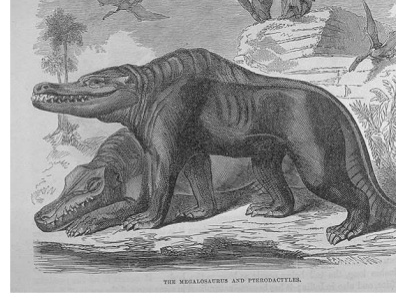
The nineteenth century changed ideas about nature as well as machines. Fossils showed that earlier worlds contained creatures unlike living animals. William Buckland described Megalosaurus in 1824, before the name Dinosauria existed. Early artists tried to reconstruct entire animals from incomplete evidence. Their illustrations reveal both a growing knowledge of ancient life and the assumptions of their time.
Charles Lyell’s Principles of Geology began appearing in 1830. He explained earlier geological changes by reference to processes that could still be observed. Erosion, sedimentation and other processes operating over long periods could reshape landscapes. This way of reasoning made a long natural history central to geology. The immense timescales of geological change challenged familiar accounts of the age of the world.
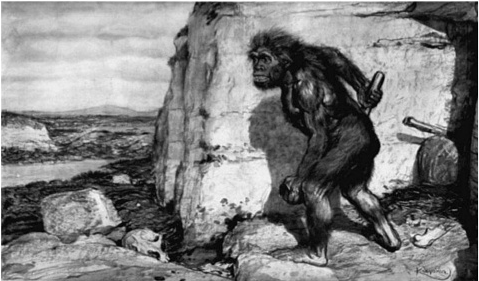
The Neander Valley discovery of 1856 intensified questions about human antiquity. The old reconstruction shown here depicts a threatening, almost animal-like figure. Such pictures are part of the cultural history of science: their appearance should not be mistaken for a direct photograph of an extinct population. Modern work places Neanderthals within a complex history of related human populations.
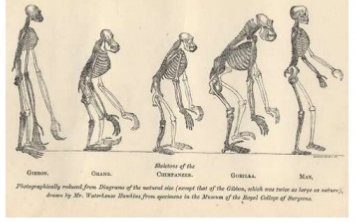
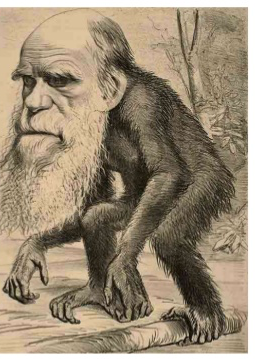
Darwin’s 1859 book gave natural selection a sustained explanatory role. Individuals vary, some differences are inherited, and reproductive success differs under particular conditions. Over many generations this can change populations. Alfred Russel Wallace independently developed the principle, and their ideas were jointly presented in 1858. Comparisons of skeletons highlighted anatomical relationships. These similarities belong to a branching history of related populations. The Darwin caricature shows another consequence: scientific ideas became matters of public argument, humor and conflict.
Further reading: University of Edinburgh: Lyell; Natural History Museum: natural selection.
4. Steel, structures and industrial scale
Ironworking was already central to the first industrial transformation. The new problem was how to produce steel cheaply and consistently in much larger quantities. Steel is an iron-based material whose properties depend on composition and treatment. Removing too little or too much carbon, or leaving troublesome impurities, changes what the product can do.
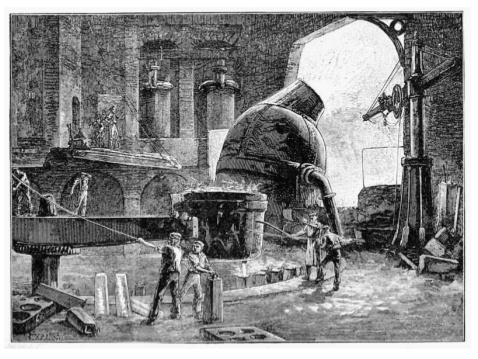
Bessemer’s process, announced in 1856, used air blown through molten pig iron in a converter. Chemical reactions removed carbon and generated heat. This converter was a different vessel from the blast furnace that produced pig iron from ore. Bessemer steelmaking was one important route, not the only later process. Open-hearth methods and improvements for different ores also contributed to the growing supply.
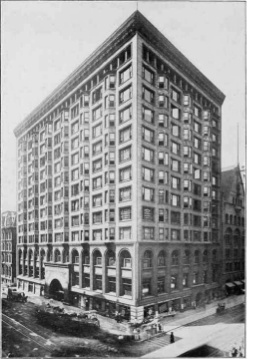
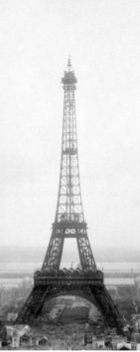
The building images show why material distinctions matter. Chicago’s Home Insurance Building belongs to the early development of metal-framed high buildings. Eiffel’s Paris tower used puddled iron, not steel. Both illustrate expanding possibilities for metal construction, but they should not be described as identical technologies. Design, joints, foundations and construction skills mattered alongside the material.
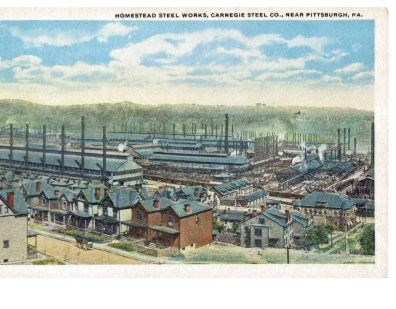
An integrated works needed fuel deliveries, ore handling, furnaces, transport and many kinds of labor. Steel production became concentrated in large industrial regions, including those of Britain, Germany and the United States. Railways and shipyards consumed the output, while military demand linked industrial capacity to state power. Production capacity depended on this entire supporting system.
Further reading: Science Museum: Bessemer; Eiffel Tower: construction material.
5. Dyes, explosives and fertilizer
Chemistry changed both ordinary objects and the organization of industry. A textile mill needed colors that could be produced predictably and remain useful on cloth. William Henry Perkin’s synthetic purple dye of 1856 showed that laboratory work could lead to a valuable manufactured product. Chemical firms developed research capacity around dyes and other substances, hiring specialists and maintaining links with universities.
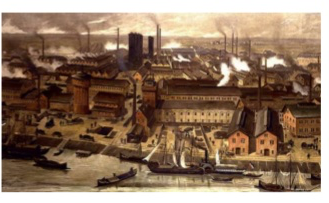
The BASF view represents a complex production site, rather than a single workbench experiment. Processes had to handle raw materials, heat, waste and variable conditions. Soap, chlorine, sulfuric acid, pharmaceuticals and artificial flavors belonged to this expanding chemical economy. Photography and cinema depended on light-sensitive materials. Celluloid supplied an early plastic support but also brought serious flammability problems. Artificial silk, including viscose rayon, used regenerated cellulose rather than a wholly synthetic polymer.
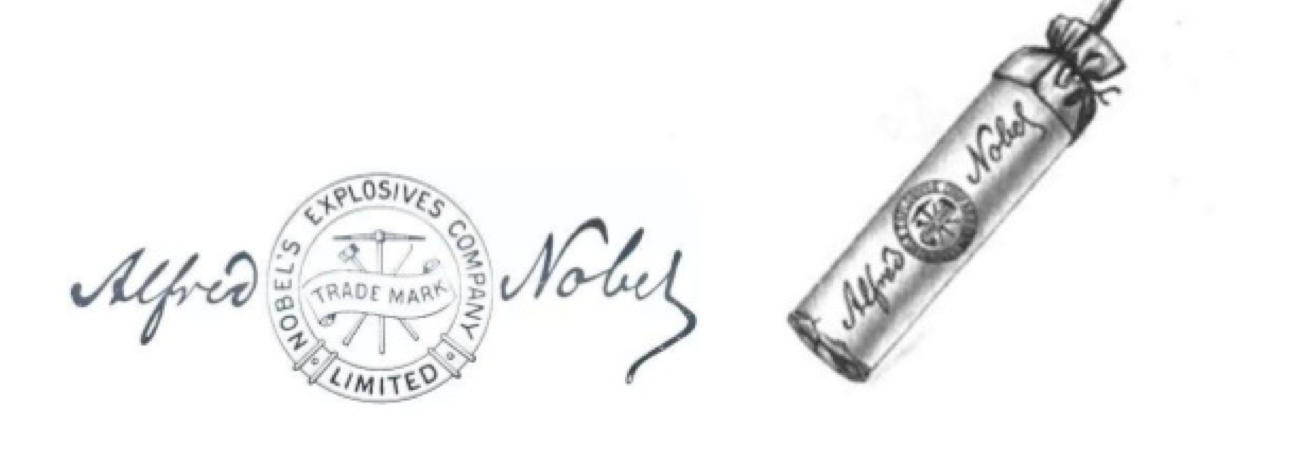
Atomic theory and the periodic table helped chemists think about matter, but we should not imagine that one discovery mechanically produced every industrial invention. Mendeleev’s 1869 table organized relationships among elements. Nobel’s dynamite patent dates to 1867. Dynamite made nitroglycerin more manageable by incorporating it into an absorbent material. Mining, tunneling and construction benefited from powerful explosives, while explosives also increased the destructive capacity of warfare.
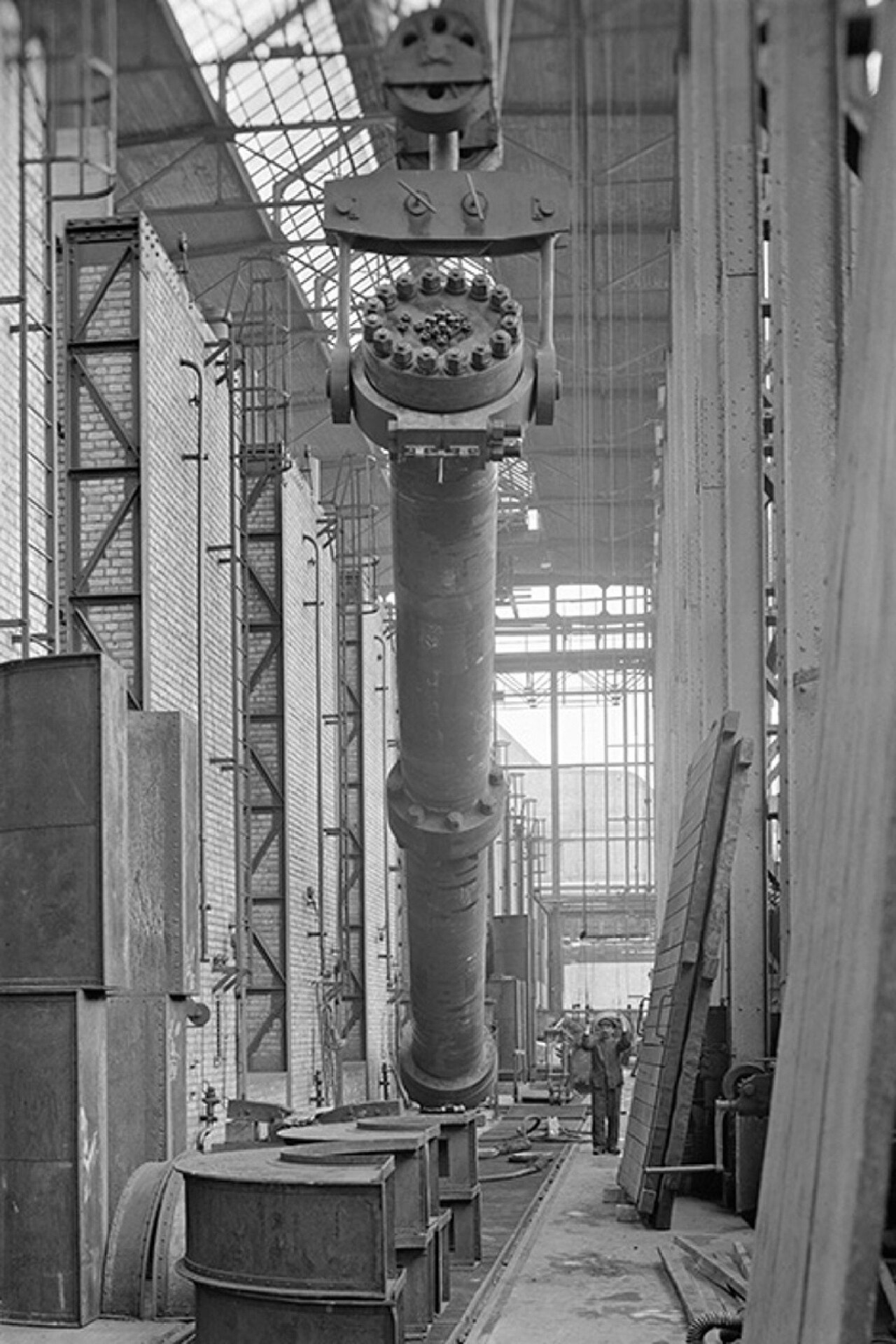
Industrial ammonia adds a further connection. At Oppau in 1913, BASF brought the Haber–Bosch process into industrial operation. The factory problem included pressure equipment, catalysts and continuous production. Ammonia provided a starting point for nitrogen fertilizers, connecting scientific industry with agricultural output. Nitrogen compounds also supplied explosives. The reactor photograph dates to 1920 and shows the industrial equipment involved after the initial plant had begun operating.
Further reading: Nobel Prize: Alfred Nobel; BASF: ammonia synthesis.
Image credits: Assembly of an ammonia reactor at Oppau, 1920. BASF Corporate History, CC BY-SA 3.0: BASF Corporate History; CC BY-SA 3.0. Adapted to PNG..

6. Making electricity available
A battery and a power station supply electricity in different ways. Volta’s battery, introduced in 1800, used chemical reactions. Faraday’s 1831 work established electromagnetic induction: changing magnetic conditions can induce an electrical effect. Engineers subsequently developed generators that could turn continuous mechanical work into a useful electrical supply. Electricity therefore did not remove the need for an energy source. Water, coal and other sources still supplied the work behind generation.
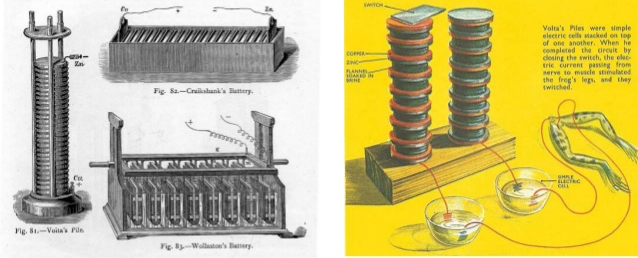
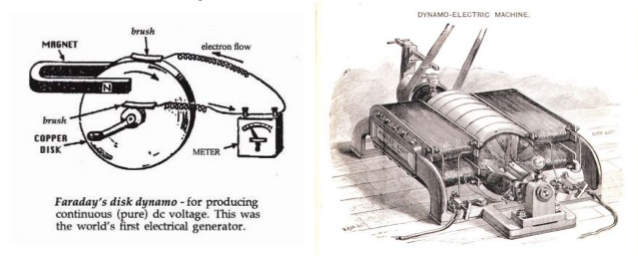
The distinction between a generator and a motor is simple but important. A generator takes mechanical work in and sends electrical energy out. A motor takes electrical energy in and produces mechanical work. The motor patent drawing illustrates the second direction. A factory could place a motor near the machine that needed motion, rather than arranging every machine around one long system of shafts and belts.
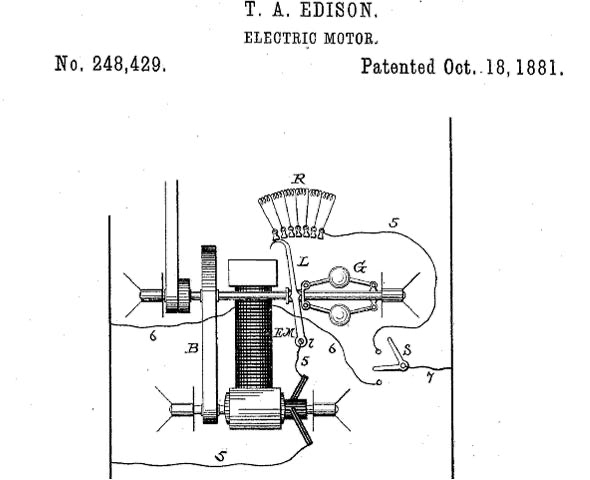
Lighting involved a similar system problem. An incandescent filament had to operate for a useful period inside an appropriate enclosure. Its electrical requirements had to fit the supply. Edison’s team worked on the lamp and on equipment around it. Joseph Swan and other inventors also contributed practical lighting designs. A history centered on one inventor alone misses the wider work that made electric lighting commercially useful.
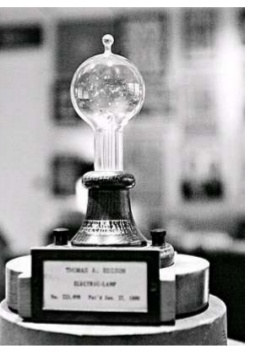
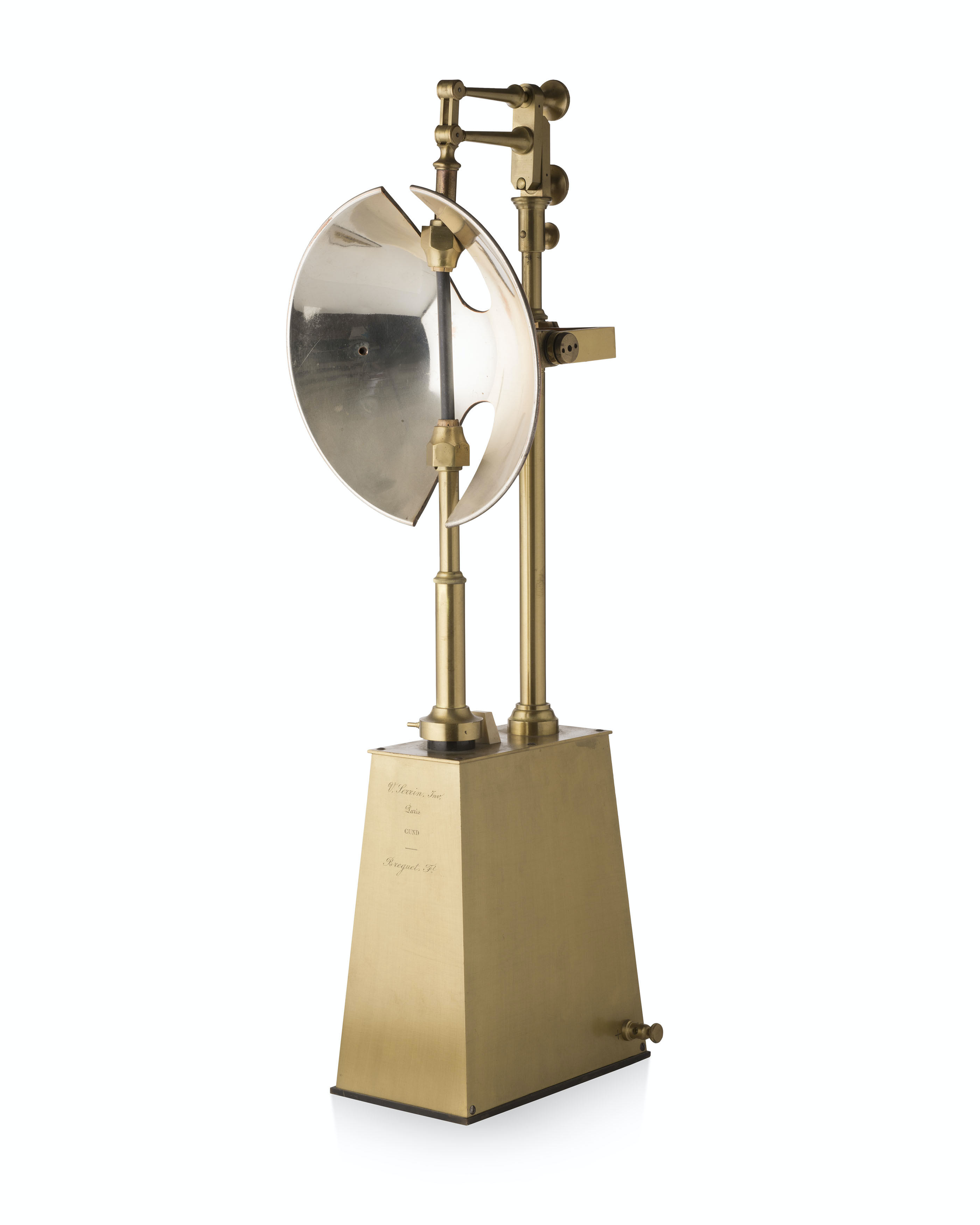
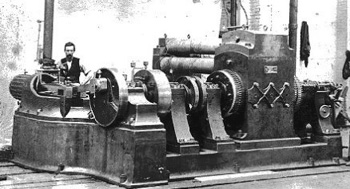
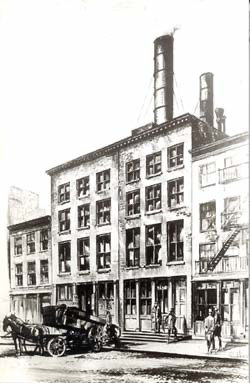
Pearl Street station began serving New York customers in 1882. The generator photograph helps us see the scale of equipment hidden behind a small lamp. A station required engines, dynamos, conductors and operators. Connections in buildings needed switches, fittings and protection. Metering and payment arrangements made electricity a service that people could purchase. Supply depended on continuing work, rather than a completed invention that could be left alone.
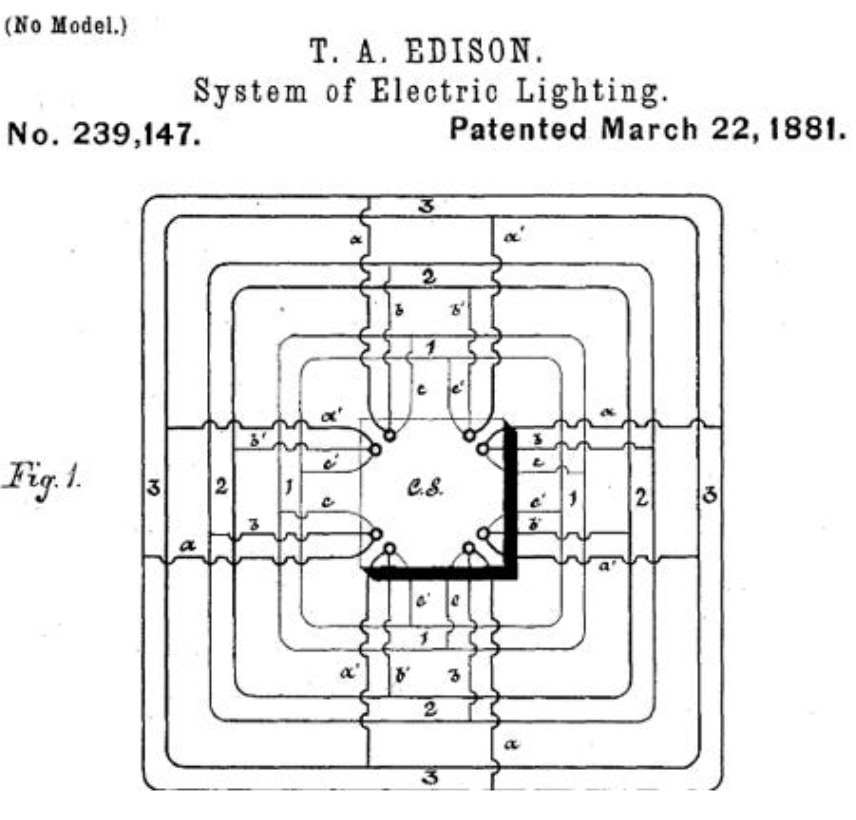
Distance posed another problem. Carrying a given power at a higher voltage permits a lower current, reducing resistive losses in the wires. Alternating-current transformers made it practical to change voltage for transmission and local use. Engineers and firms associated with AC systems, including Westinghouse and Tesla, contributed to this development. The significance is the distribution arrangement, not merely a contest between famous personalities. Adoption and standardization took time, and local systems did not immediately form one universal grid.
| Stage | Role |
|---|---|
| Power source | Water or fuel supplies energy |
| Generator | Motion produces electricity |
| Network | Wires carry electrical energy |
| Use | Light, heat or mechanical work |
Further reading: Edison Papers: power system; National Park Service: Edison.
7. Factories, households and European power
Electrical equipment entered everyday life at different speeds. A city street, a wealthy household and a rural home could have very different access. Electric lighting extended usable hours, but a longer working day could also mean longer labor. Appliances required purchase, a suitable supply and repairs. The existence of a device does not show that most people owned it. Electric household refrigeration spread later than the earliest lamps and motors.
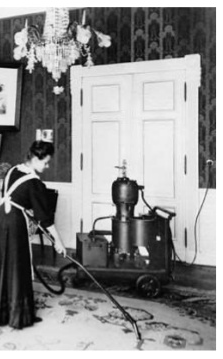
Industrial capacity also changed relations between states. Britain’s shipbuilding and maritime infrastructure supported a global navy. Germany developed major steel, chemical and electrical industries. France contributed important engineering and transport developments, while Russia faced the challenge of connecting a vast territory. These countries did not form a single uniform European experience.
Weapons depended on much that lay outside a battlefield. Steelworks supplied materials, chemical works supplied propellants and explosives, railways moved equipment, and communications connected headquarters with distant operations. Production had to continue after the initial equipment was delivered. A modern army or fleet needed ammunition, spare parts, trained personnel and repair capacity. The same factories and networks also served civilian needs, although military priorities could redirect resources and impose enormous costs.
8. Rubber, bicycles and road engines
Industrial materials changed personal mobility. Vulcanization, associated with the work of Charles Goodyear and Thomas Hancock in the nineteenth century, improved the usefulness of rubber. Rubber goods expanded far beyond one application. Tires became part of a larger story that also required bearings, metal frames, wheels and reliable manufacturing.
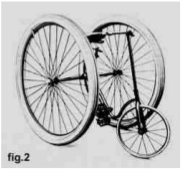
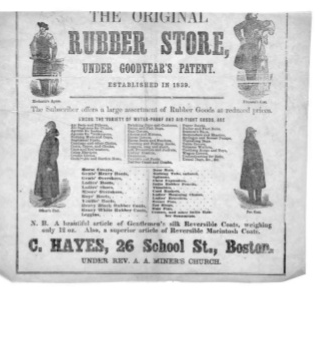
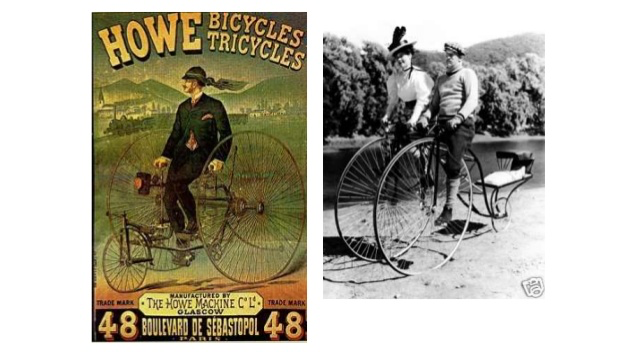
The high-wheel bicycle and its advertisement capture a period when mobility was also a public spectacle. The rider’s position made mounting and falling difficult, and later bicycle designs changed stability and accessibility. Advertisements sold a way of living as well as a machine. Bicycles widened opportunities for recreation and travel, although cost and social expectations affected who could use them.
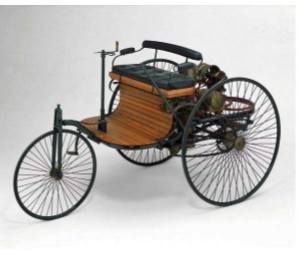
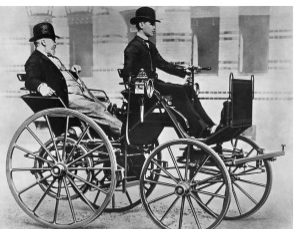
Internal combustion brought a different source of motion to transport. Otto’s 1876 engine belongs to the development of the four-stroke gas engine. Benz and Daimler adapted engine technology to vehicles in the 1880s. Diesel’s practical 1897 engine used compression ignition. Different fuels, ignition systems and engine designs opened different possibilities for transport.
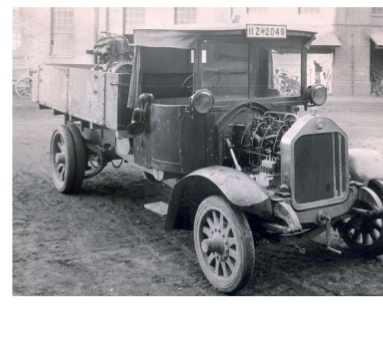
An engine could power more than a car. Stationary installations, pumping, industrial work and ships also used internal combustion. The historical truck illustrates a later application, not a photograph of Diesel’s first experimental engine. Fuel distribution, mechanics and suitable roads determined where motor transport became dependable. Steam and animal transport continued alongside it.
Further reading: DEUTZ chronology.
9. Cities, routes and the sea
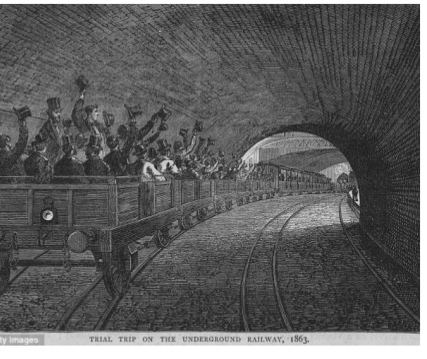
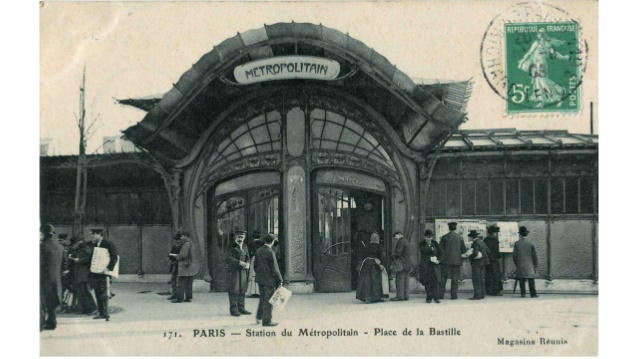
Urban transport reorganized the space of daily life. London’s Underground opened in 1863 with steam-powered trains, while Paris’s Métro opened in 1900. The tunnels, stations and entrances were as important as the vehicles. A railway route could make a new residential area accessible and alter the value of land. Large engineering works such as the Mont Cenis and Simplon tunnels also made difficult routes through the Alps more usable.
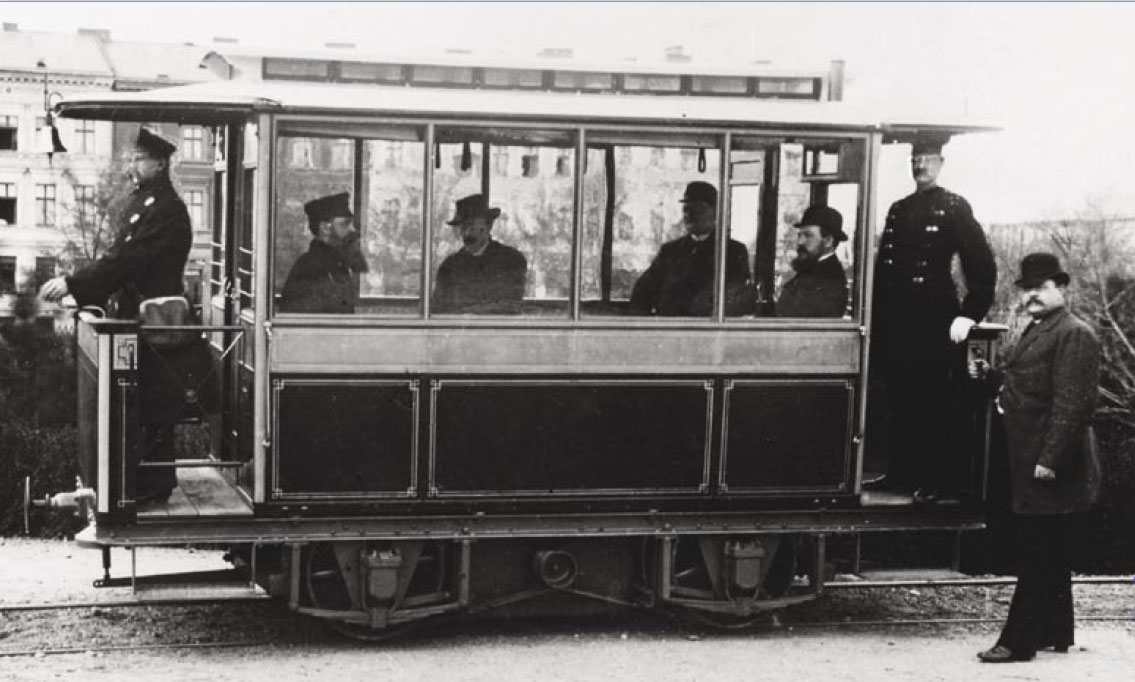
The Paris entrance turns infrastructure into an architectural presence in the street. Electric traction provided another urban option. Siemens’s Lichterfelde line began operating near Berlin in 1881. Tram systems needed track, power and coordination with other street users. A city could not obtain the benefits simply by purchasing a motor.
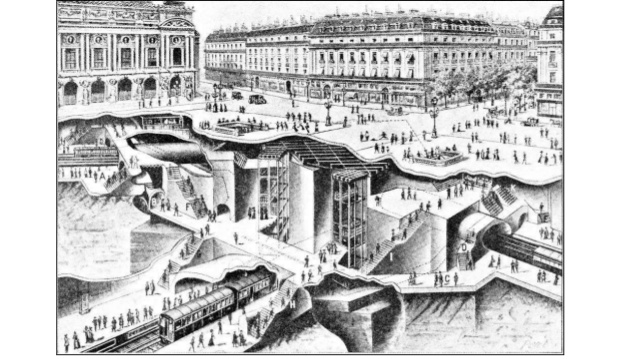
The illustration of a multi-level city is an imagined arrangement. It shows how people pictured the future through the technologies around them. Roads, railways, underground routes and pedestrians occupy different levels. Such images express confidence in engineering while raising practical questions about cost, access and the people whose neighborhoods would change.
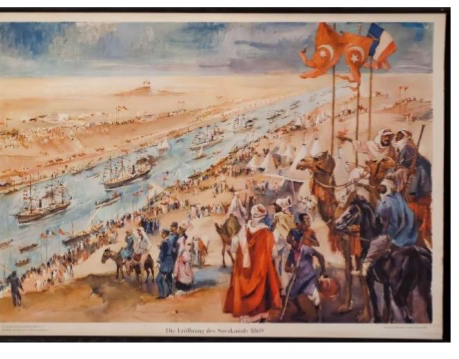
At sea, engines and metal construction supported larger vessels and regular services. Canals altered the geography of routes. Suez opened in 1869, Kiel in 1895 and Panama in 1914. Each involved construction and continuing operation, and each had strategic significance. Commercial shipping and naval planning depended on passages whose control could be contested.
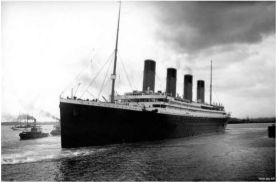
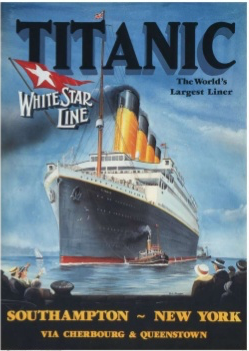
Titanic’s 1912 disaster belongs within this account of industrial ambition. A large ship was an assembly of materials, machinery, people and operating procedures. Its size did not eliminate vulnerability. Wireless communication, evacuation arrangements and rescue capacity affected what happened when the voyage went wrong. The photograph and advertisement let us compare the promise of modern transport with its human risks.
Further reading: Royal Museums Greenwich: Titanic.
Image credits: Lichterfelde electric tram, historical image dated 1882: Unknown photographer; Public domain.

10. Food, distance and the IcyBall
Refrigeration changed the relationship between the place where food was produced and the place where it was eaten. Chilled and frozen cargoes could travel by rail and ship, bringing meat and other perishable products to distant markets. Producers in Australia and South America could supply consumers far away. These changes affected farmers, shipping firms, food prices and diets.
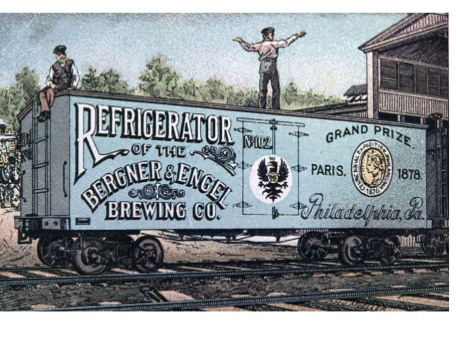
The railway car is one link in a chain. Food must reach it in suitable condition, remain cold while traveling, and move into adequate storage at the destination. Cooling capacity, handling and schedules have to fit together. Refrigeration slowed spoilage, but it did not automatically make every food safe or remove the need for hygiene.
Now return to the opening question. The IcyBall used ammonia and water in a cycle powered by heat. During charging, heating drove ammonia out of solution, and cooling elsewhere allowed it to condense. During refrigeration, ammonia evaporated and absorbed heat from its surroundings. Water in the other vessel absorbed the ammonia vapor. The cycle moved heat rather than producing cold as a separate substance.
The modern demonstration image uses solar heating and shows the same basic possibility: a refrigerator can use an energy source other than an electric motor. It is a later demonstration of a 1920s device, not a nineteenth-century photograph. Rural customers, urban households and commercial shipping faced different conditions, so useful designs also differed. The availability of electricity influenced which solution made sense.

| Stage | Role |
|---|---|
| Production | Prepare and cool the food |
| Transport | Maintain suitable conditions |
| Storage | Keep cooling at the destination |
| Market | Deliver usable food |
Further reading: IcyBall refrigeration; Smithsonian: IcyBall.
11. Europe, Japan, China and India
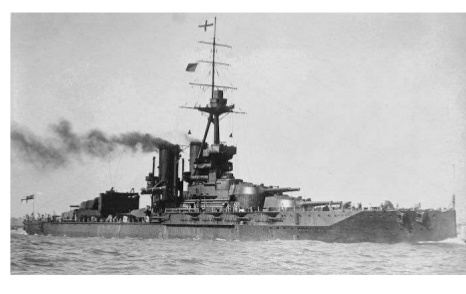
A battleship makes the relation between technology and political power especially visible. The ship depends on steel, engines, guns, navigation and communications, but it also depends on dockyards and people ashore. Dreadnought, launched in 1906, became a powerful symbol of naval competition. A state needed continuing resources to keep such a fleet available. The costs reached far beyond the initial purchase.
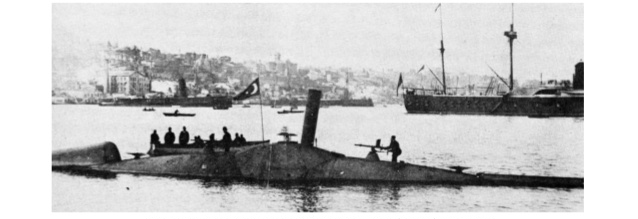
The Ottoman submarine image connects this subject with our earlier discussion of reform. Abdülhamid was acquired in the 1880s, during a period of experimentation with underwater vessels. Acquiring advanced equipment could demonstrate ambition and open opportunities for learning. Keeping it useful required training, maintenance and an organization able to support it. The same distinction appears in other regions.
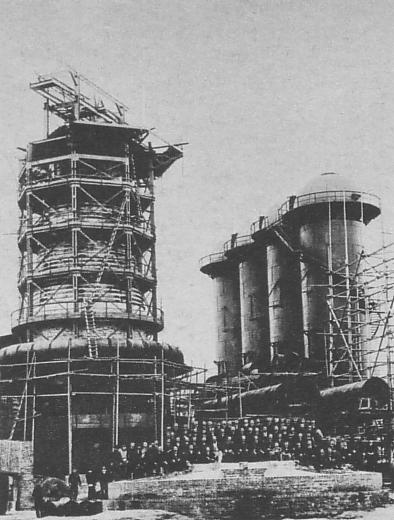
Japan’s Meiji government, established in 1868, made industrial and institutional reform a major priority. Technical education, foreign specialists and overseas learning helped support new capacities. Coal mining, shipbuilding and steelmaking developed through a combination of imported technology and local adaptation. Yawata began operating in 1901. Its history helps us see the work involved in moving from dependence on imported materials toward domestic supply.
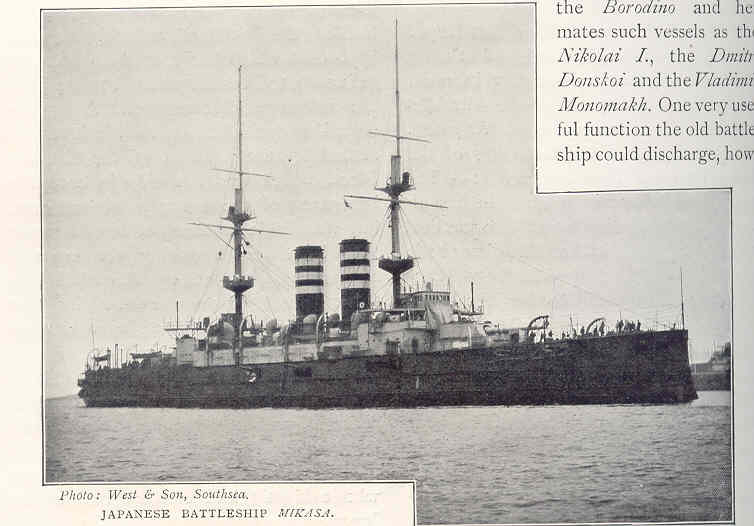
Japan’s victories over Qing China in 1894–95 and Russia in 1904–05 changed international perceptions of power. They did not result from a single superior invention. Training, supply, command and industrial support affected the use of ships and weapons. The Mikasa photograph illustrates Japan’s modern fleet, while reminding us that foreign-built equipment and domestic capability could coexist. Japan’s growing power also brought imperial expansion and coercion toward other peoples, including the annexation of Korea in 1910.
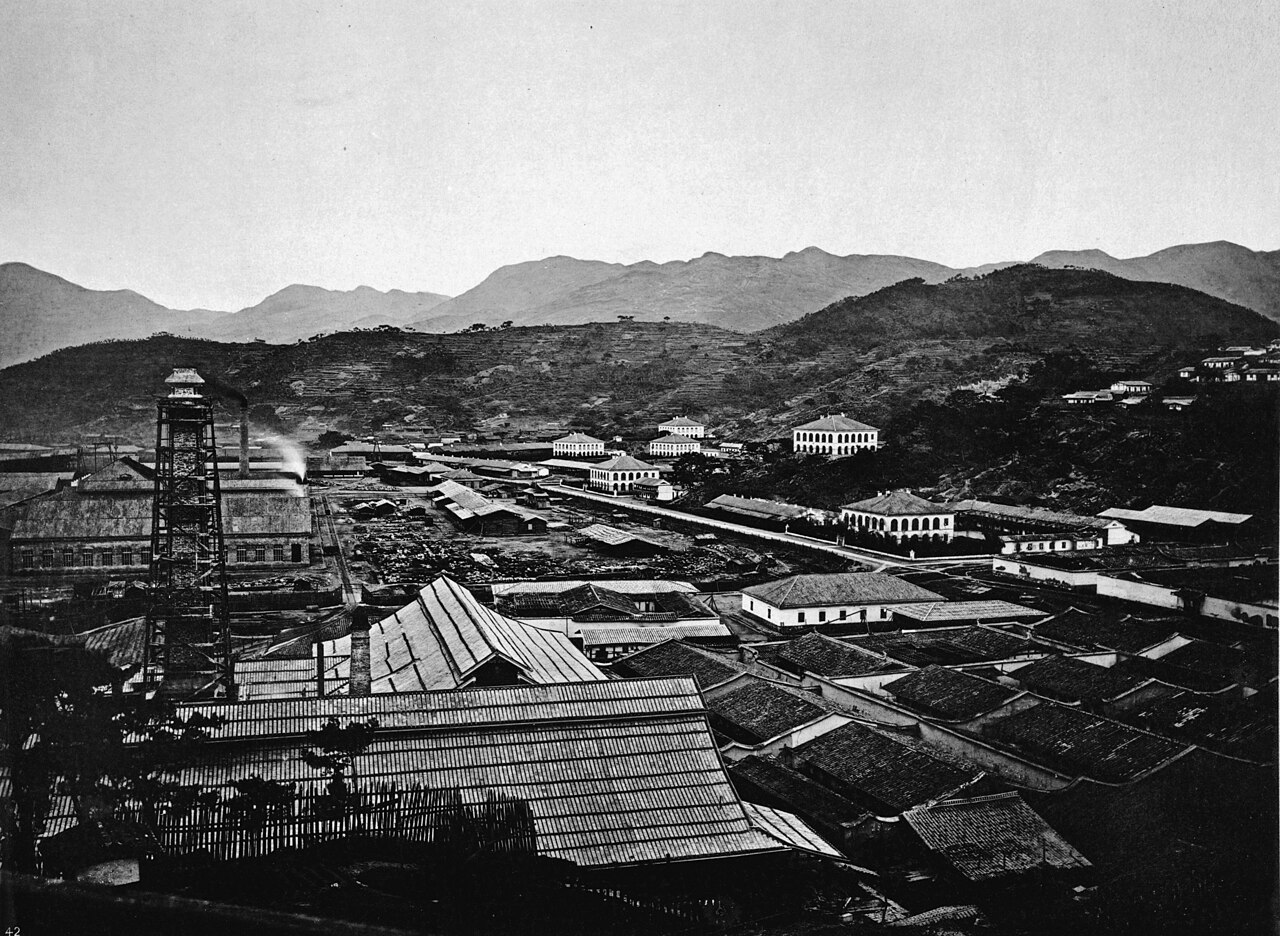
China’s Self-Strengthening reforms developed arsenals, shipyards, technical schools and translation projects. Foochow and Jiangnan were important sites of industrial and military work. These efforts produced real experience with machinery and modern production. The 1894–95 defeat should therefore prompt questions about coordination, resources and institutions rather than the conclusion that nothing had changed. Regional initiatives and modern equipment did not automatically create an integrated military system.
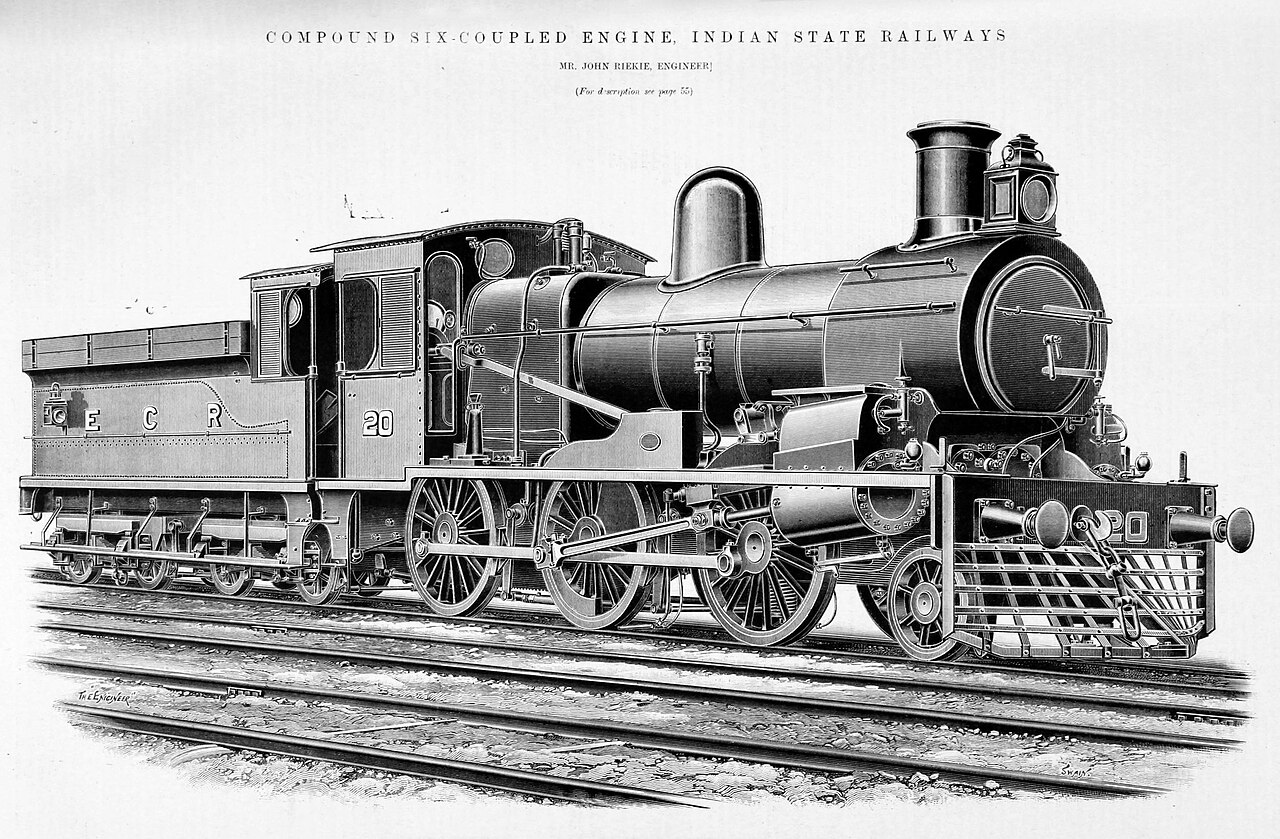
India presents a different political setting because British colonial rule shaped priorities. Railways and telegraphs carried goods and information while also supporting administration and military logistics. The infrastructure could serve several purposes at once, and its benefits were unequal. Indian workers and entrepreneurs contributed to industrial development. Tata’s steel production at Sakchi in 1912 provides a concrete example of Indian enterprise within this unequal environment.
A striking military-logistics example is the British expedition to Abyssinia in 1867–68. It drew on resources from India, including locomotives, and used railway construction, telegraphy and desalination equipment. Technology connected imperial territories as well as individual battlefields. Indian industrial and human resources cannot be treated as passive background to European operations.
Across these cases, buying a machine was only one stage. People had to learn to operate it, workshops had to repair it, and institutions had to finance and supply it. Making comparable equipment domestically required additional capabilities. Different political conditions influenced these processes, but none of the cases can be explained by a simple ranking of national intelligence or culture.
| Stage | Role |
|---|---|
| Acquire | Purchase equipment |
| Operate | Train and supply people |
| Maintain | Repair and replace parts |
| Produce | Develop local industry |
Further reading: Royal Museums Greenwich: Dreadnought; Yawata steelworks history; Benjamin Elman: Qing naval reform; Treaty of Portsmouth; Tata Steel heritage; National Army Museum: Abyssinia expedition.
Image credits: Government Yawata steelworks, historical photograph dated 1900: Unknown photographer; Public domain; Japanese battleship Mikasa, 1905. West & Son, Southsea: West & Son, Southsea; Public domain; Foochow arsenal, photograph by John Thomson: John Thomson; Public domain; East Coast Railway locomotive No. 20, India, 1900: Unknown photographer; Public domain.


12. Different ways to fly
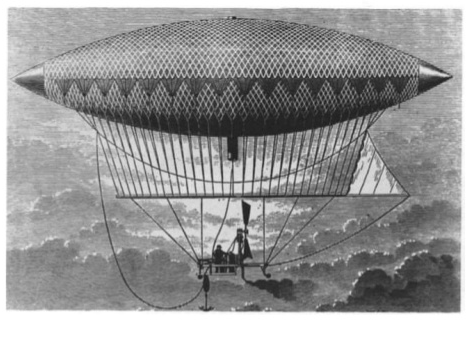
Flight was another field in which several technical paths coexisted. Hot-air balloons rose because of buoyancy. An airship combined a buoyant body with propulsion and steering, making movement less dependent on the wind. Henri Giffard’s steam-powered airship of 1852 belongs to this history. A glider followed a different principle, using aerodynamic lift while moving through the air.
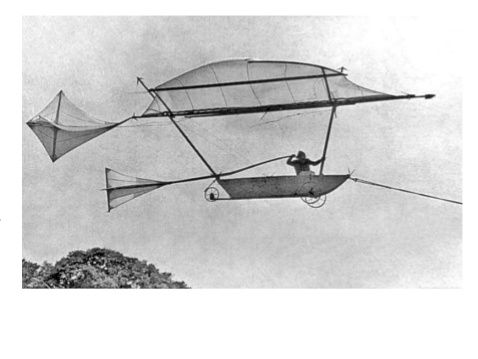
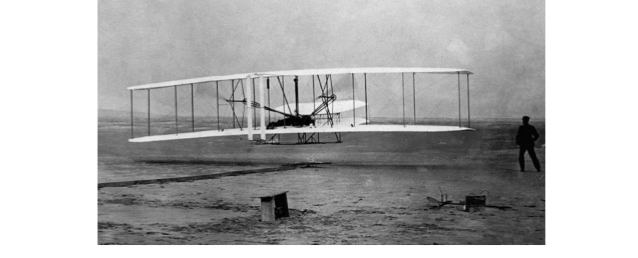
George Cayley studied the requirements of heavier-than-air flight, including the separate problems of lift and propulsion. Later successful airplanes also needed control. The Wright brothers’ 1903 flights combined an engine, propellers, wings and a means of controlling the aircraft. A powerful engine alone would not have solved the problem.
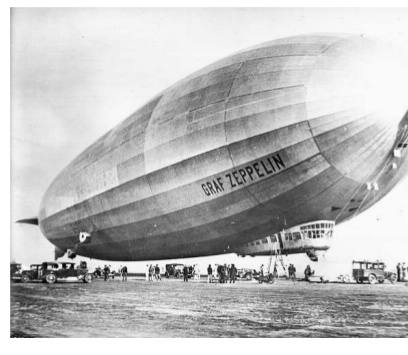
Zeppelin’s first airship flew in 1900, but the large Graf Zeppelin pictured here belongs to the later 1920s. The illustration therefore shows the subsequent development of the airship path, rather than the first Zeppelin itself. Before and during the First World War, flight acquired military roles in observation and other operations. Its civilian and military futures were still developing.
13. Messages, news and recorded experience
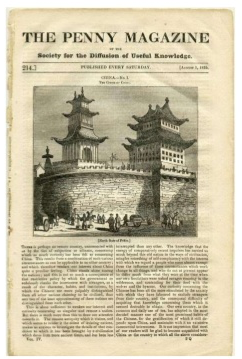
Industrial communication began before electronic broadcasting. Steam-powered printing increased the capacity of the press, and inexpensive publications such as the Penny Magazine reached wider audiences. Lower production costs mattered, but so did reading ability, distribution and the price of a copy. Newspapers could connect people who never met and give them a shared sense of distant events.
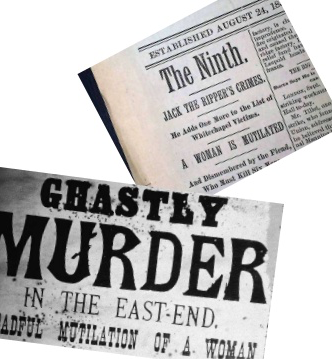
William Thomas Stead and the Pall Mall Gazette belong to the history of investigative and campaigning journalism. Newspapers could expose abuse and seek political change, while other reporting relied on sensation and shocking headlines. These tendencies could coexist. The press shaped public opinion about crime, empire and war, making information a political as well as a commercial resource.
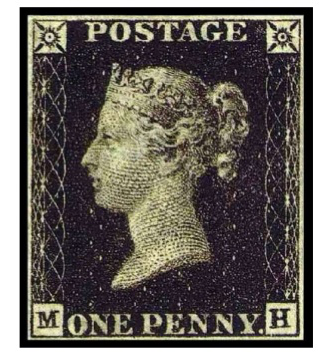
Postal reform also widened communication. Britain’s Uniform Penny Post and the Penny Black stamp in 1840 simplified payment and reduced barriers to sending ordinary letters. A stamp was the visible part of a service that depended on transport, sorting and administration. Like electrical supply, the service required a reliable organization around the device or token used by the customer.
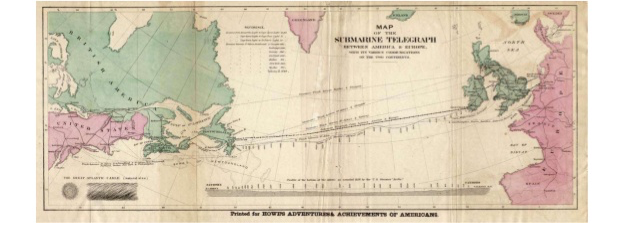
Electrical telegraphy separated the speed of a message from the speed of a person or vehicle carrying paper. Morse’s 1844 Washington–Baltimore demonstration is an important American milestone. Submarine cables extended this possibility across water. The first Atlantic cable of 1858 worked only briefly; a durable link followed in 1866. Insulation, cable manufacture, laying equipment and signal interpretation were all part of the achievement.
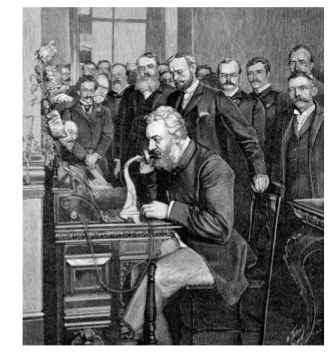
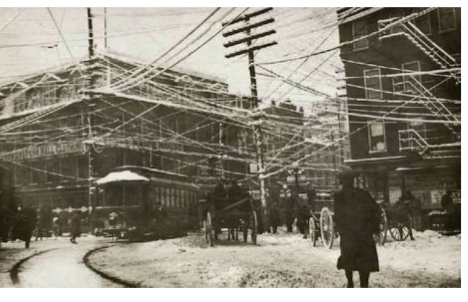
The telephone added speech. Bell’s 1876 patent is a useful chronological marker, but practical service required transmitters, receivers and switching systems. Edison’s carbon-transmitter work improved the conversion of sound into changing electrical current through changes in resistance. The dense overhead wires in the street photograph make the network visible: connections could become a substantial physical presence in the city.
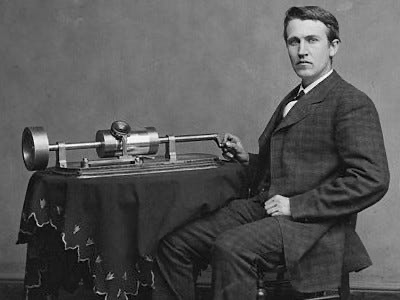
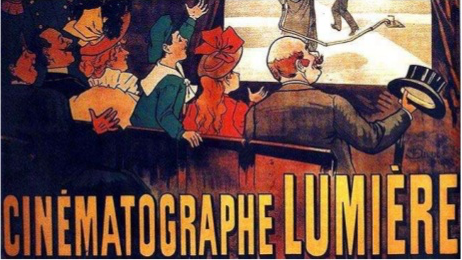
Recording changed the relation between an event and its audience. A phonograph stored sound as a physical trace that could later drive playback. Motion-picture equipment recorded successive images. The camera, a viewing device and a projector performed different tasks. Edison’s staff, including William Kennedy Laurie Dickson, contributed to early motion-picture work, while the Lumière brothers’ 1895 screenings helped establish cinema as a shared public experience.
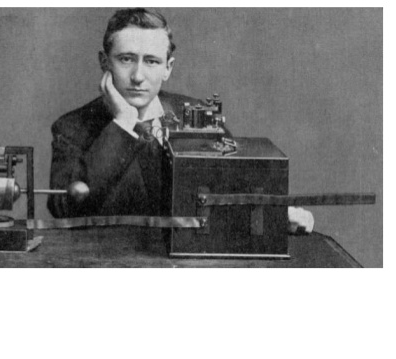
Wireless communication offered another route. Marconi’s reported reception of a transatlantic signal in 1901 became a celebrated milestone. Practical wireless still required stations, skilled operators and suitable equipment. Ships could communicate without carrying a cable back to land. These possibilities made communication valuable for navigation and military operations as well as news and commerce.
Further reading: Edison Papers: 1877; National Park Service: Edison.
14. Microbes, surgery and household life
The scientific changes of this period also altered ideas about health. Pasteur’s work connected microorganisms with fermentation and supported new approaches to disease. Understanding microbial processes affected food preservation and the handling of milk as well as laboratory medicine. A chemical or biological explanation could therefore enter everyday life through a bottle, a meal or a surgical procedure.
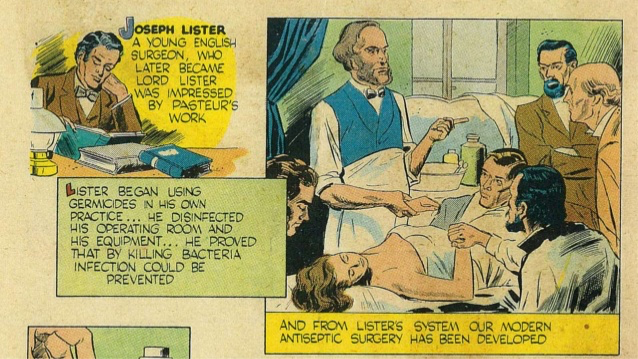
Joseph Lister applied antiseptic methods to surgery in the 1860s and published his system in 1867. The illustrated story presents antisepsis as a dramatic intervention against infection. In practice, changing surgery required more than announcing a principle. Instruments, dressings, procedures and the habits of hospital staff had to change. Later aseptic practice placed increasing emphasis on preventing contamination.
Robert Koch’s work connected particular microorganisms with particular diseases, and his tuberculosis research received the 1905 Nobel Prize in Medicine. These developments did not make all illness immediately curable. They provided new ways to investigate causes and prevent transmission, while access to sanitation and treatment remained unequal.
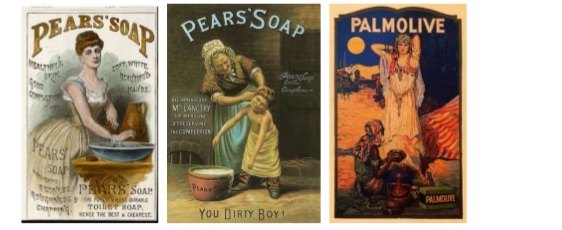
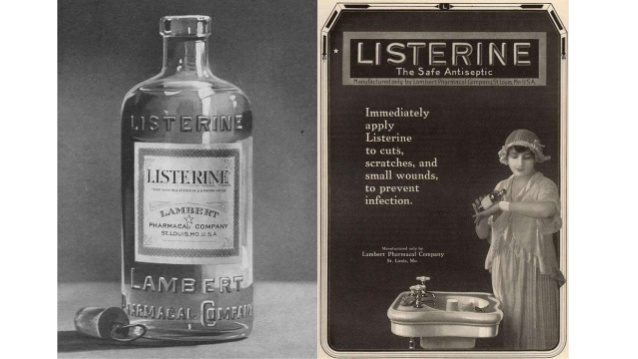
The soap and mouthwash advertisements show how scientific language reached consumers. Listerine took its name from Lister, but the branded product was not his invention. Advertising could borrow authority from medicine and link cleanliness with social confidence. The images invite us to distinguish a scientific principle, a useful product and the promises made to sell that product.
Further reading: Science Museum: Lister; Nobel Prize: Koch.
15. A connected world by 1914
By 1914, industrial capabilities linked activities across great distances. Mines supplied fuel and materials, factories transformed them, transport carried products, and communications coordinated decisions. These connections increased the scale of useful services and the scale of destruction that states could organize. The First World War would expose both the power and the human costs of industrial systems.
Take an electric lamp as a model answer to our central question. Its filament must work, but it also needs generation, wiring and suitable fittings. People must maintain the equipment and organize payment. A household’s location and income influence whether it can use the service. The useful technology is the continuing arrangement that connects these activities.
The same reasoning applies to our regional comparison. Japan, China, India and European states encountered related technologies under different political and economic conditions. Acquisition, learning, repair and domestic production involved different capacities. Comparing those conditions helps explain historical outcomes more effectively than treating an invention as a self-sufficient cause of progress.
Further reading: Edison Papers: power system.
16. Further examples and reading
Edison’s other projects show why organized invention did not always produce a successful business. His vote recorder could register choices, but legislative users did not necessarily want the procedural changes it implied. Automatic telegraphy and stock printers addressed the speed and handling of information. The electric pen produced perforated stencils through which ink could make copies. These devices connected invention with existing practices and customers.
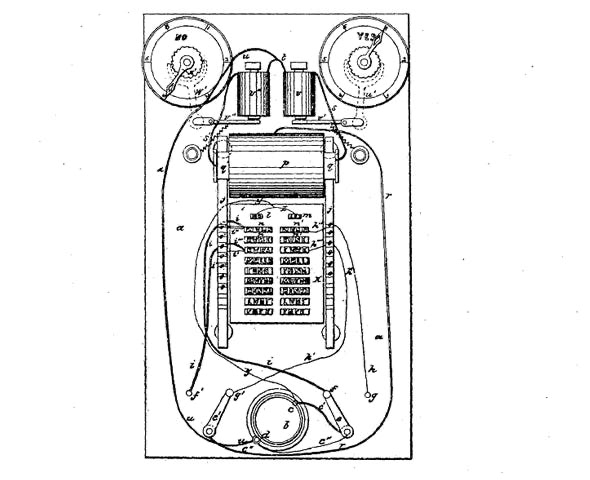
The phonograph, carbon transmitter and motion-picture camera belong to this wider history of communication. The loud-speaking telephone used an electrochemical effect in its receiver. The signal changed friction between a metal contact and a moving, chemically treated chalk surface. This motion drove a diaphragm to reproduce sound. The receiver reached the British market in 1879, but faced competition from simpler telephone equipment.
Ore separation required crushing and concentrating material on a large scale. Edison’s investment in ore milling encountered severe commercial problems, while parts of the crushing technology found later use in cement production. His cement work improved manufacturing equipment and processes. Technical learning could move from one business to another even when the original venture failed.
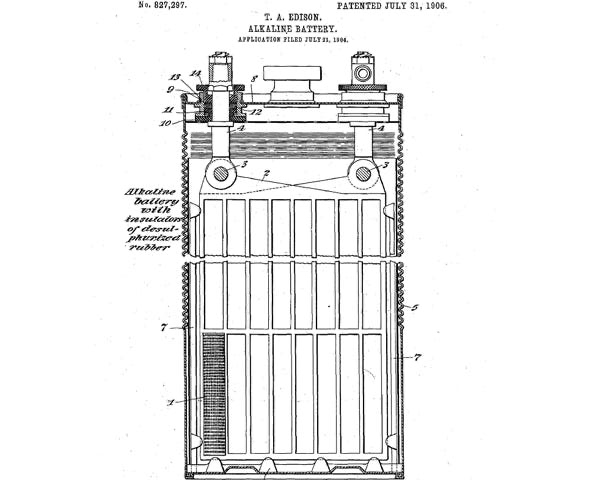
Edison also investigated direct conversion of coal into electricity during the 1880s. The experiments encountered practical and safety difficulties. His nickel–iron alkaline storage battery followed another path and eventually found substantial markets. A battery stores energy chemically and must be recharged, while a fuel cell receives a continuing supply of reactants.
For a fuller account, Joel Mokyr’s The Second Industrial Revolution, 1870–1914 is especially useful on connected systems and industrial scale. Science and Technology in World History provides broader context. The linked Edison Papers and museum collections allow individual objects and claims to be followed further. The regional comparison also draws on histories of Meiji industrialization, Qing reform and Indian enterprise.
Further reading: National Park Service: Edison; Edison Papers: ore milling; Edison Papers: vote recorder; Edison Papers: fuel-cell experiments; Edison Papers: loud-speaking telephone; Benjamin Elman: Qing naval reform.