ENG 151 · LECTURE 03 · READING BOOKLET
Knowledge across the medieval world
Our opening question in Constantinople, followed by the chronological story of scholarship across cultures.
Read continuously or use the contents. Select any image to view it at full size.
1. University of Constantinople: our opening question
Before we follow the chronology of scientific work, let us begin with Istanbul. We know the city through its streets, monuments and daily activity. But it also brings us close to a much older question: what does a society do when it wants learning to prosper? The University of Constantinople is our opening example. Its story puts education and political decisions in the same frame.
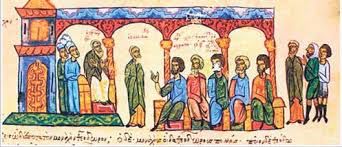
In 425, Emperor Theodosius II organized higher teaching with thirty-one publicly supported chairs. The programme included Greek and Latin grammar and rhetoric, together with law and philosophy. Language study and the ability to construct an argument had practical importance in imperial administration. Supporting teachers was one way of preparing people for public service.
Think about what that decision made possible. A teacher needs time and a livelihood. A student needs access to someone who can explain a difficult text and judge an argument. Public support can bring these people together and give education a lasting place in society. It can also influence which subjects receive attention. The important issue for us is the relationship between leadership and the conditions for learning.
The conventional name “University of Constantinople” helps us recognize the subject, although its institutions differed from a modern university. We also need to distinguish the teaching arrangements of 425 from the later Magnaura school. The Cambridge history of Byzantine intellectual institutions explains those distinctions. They help us describe this long educational history accurately while keeping its central significance in view.
2. The imperial city beneath Istanbul
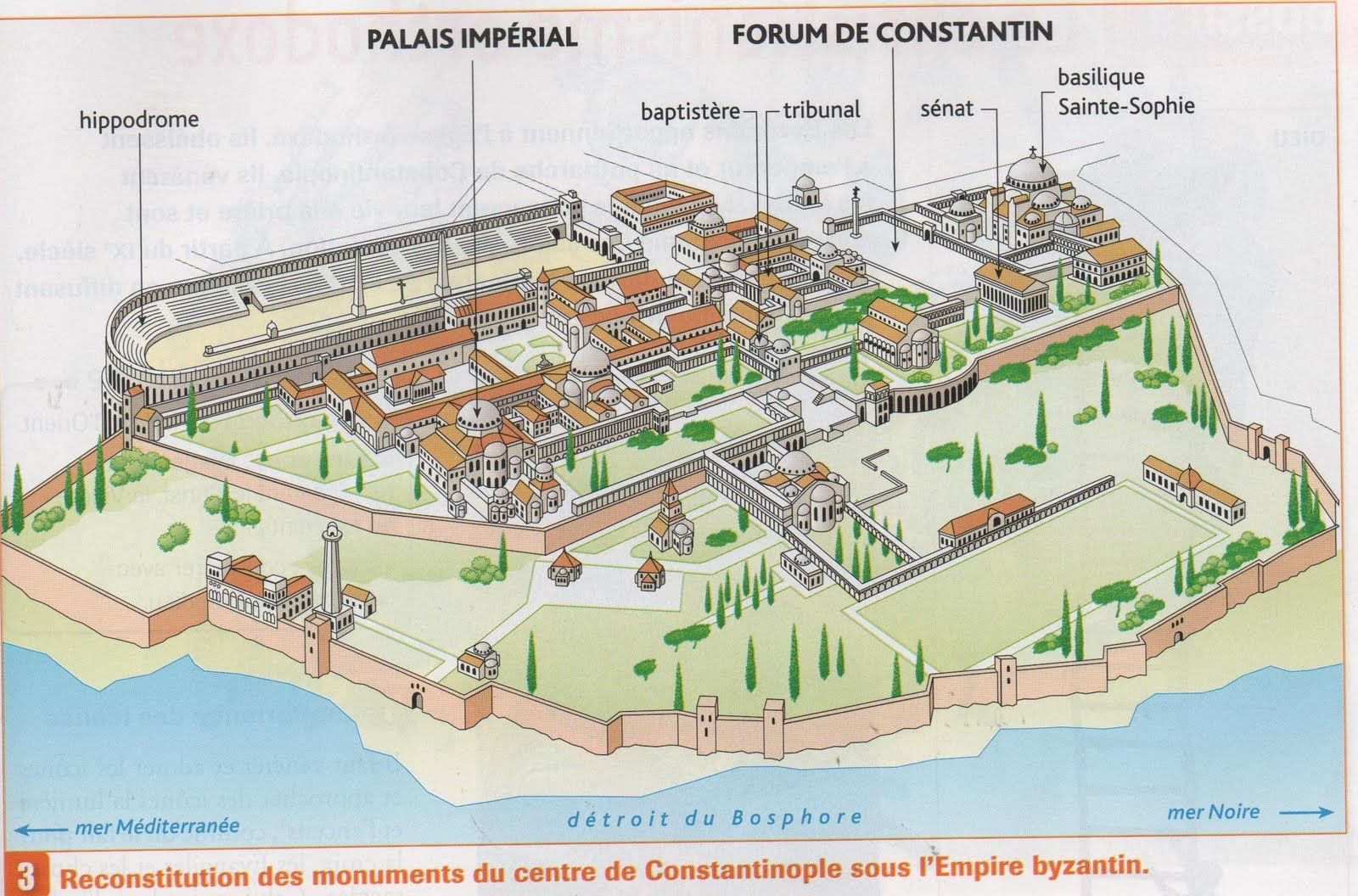
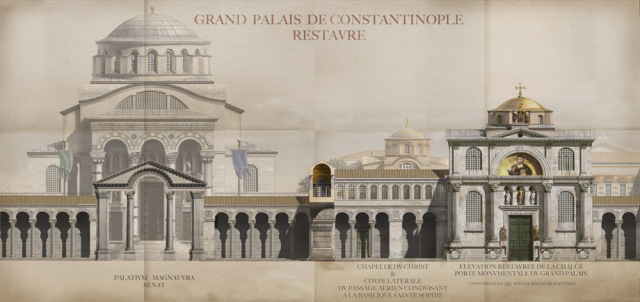
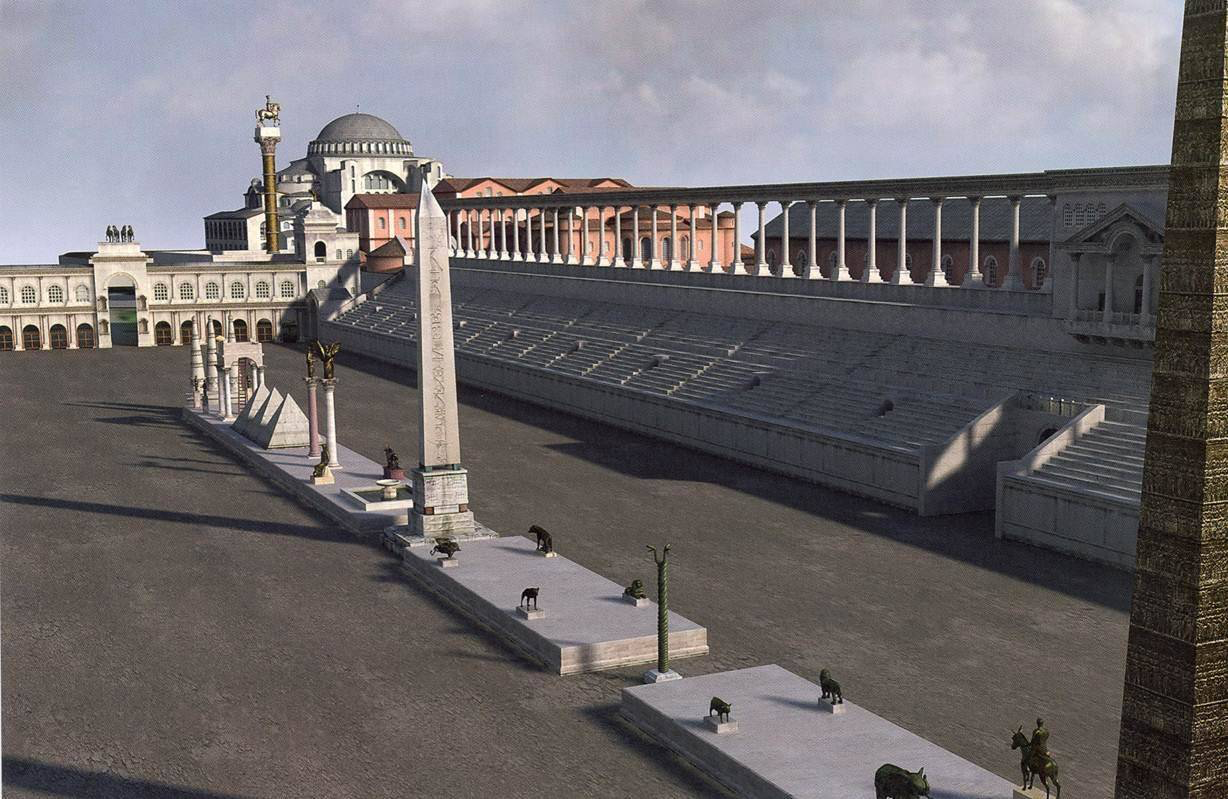
The maps give this institutional story a physical setting. The palace district belonged to a densely organized capital in which government, ceremony and daily work brought many kinds of expertise together. Higher learning did not take place in isolation from that world. Its patrons and its students had reasons to value educated people.
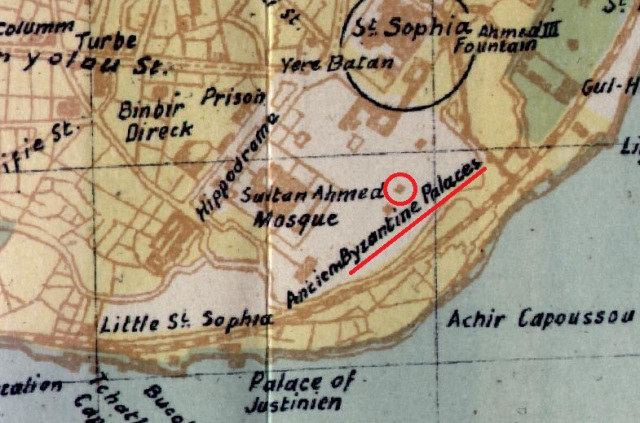
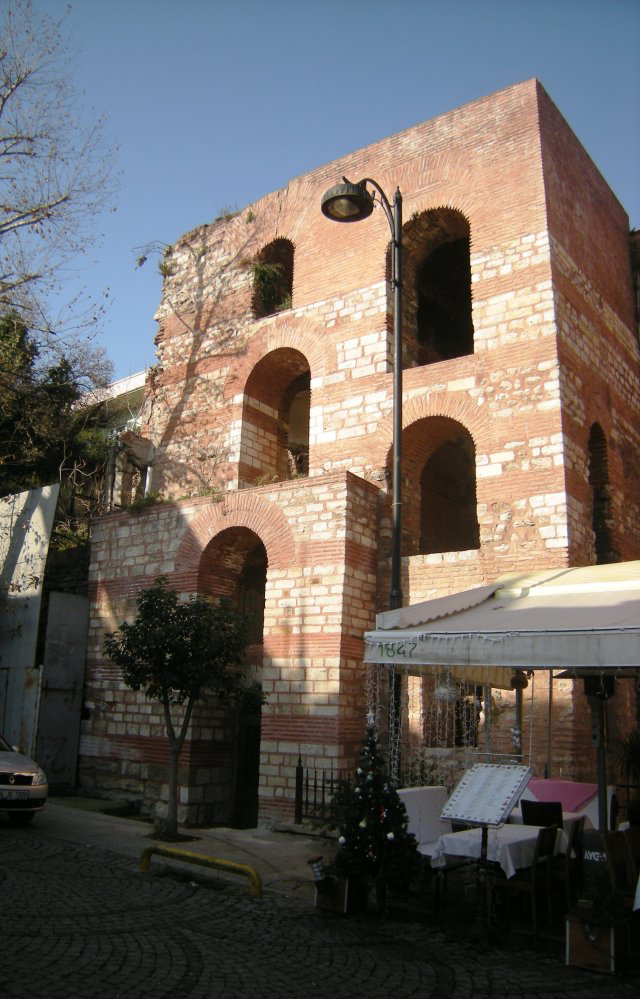
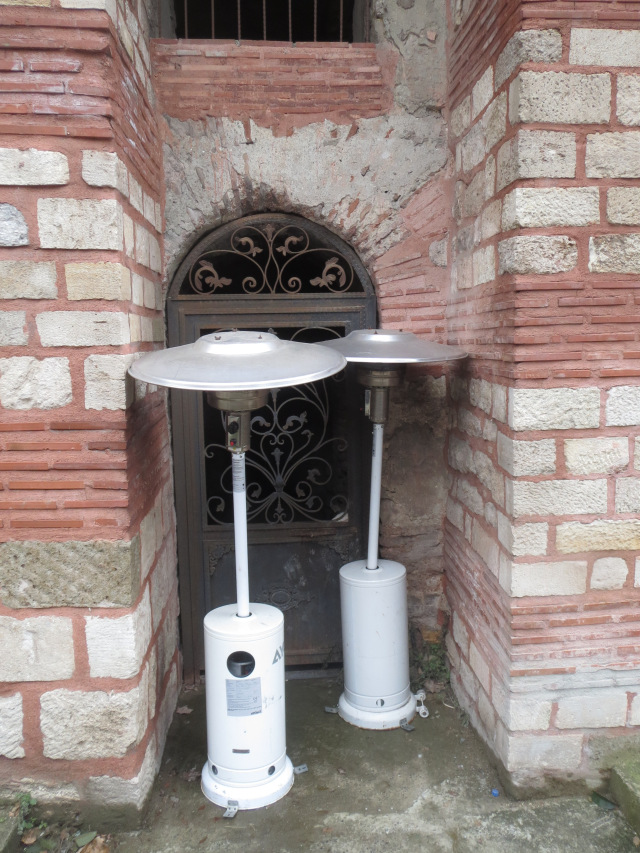
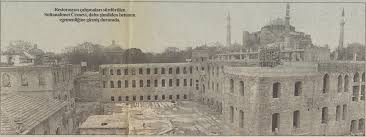
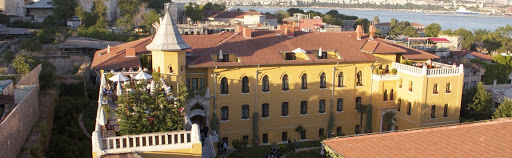
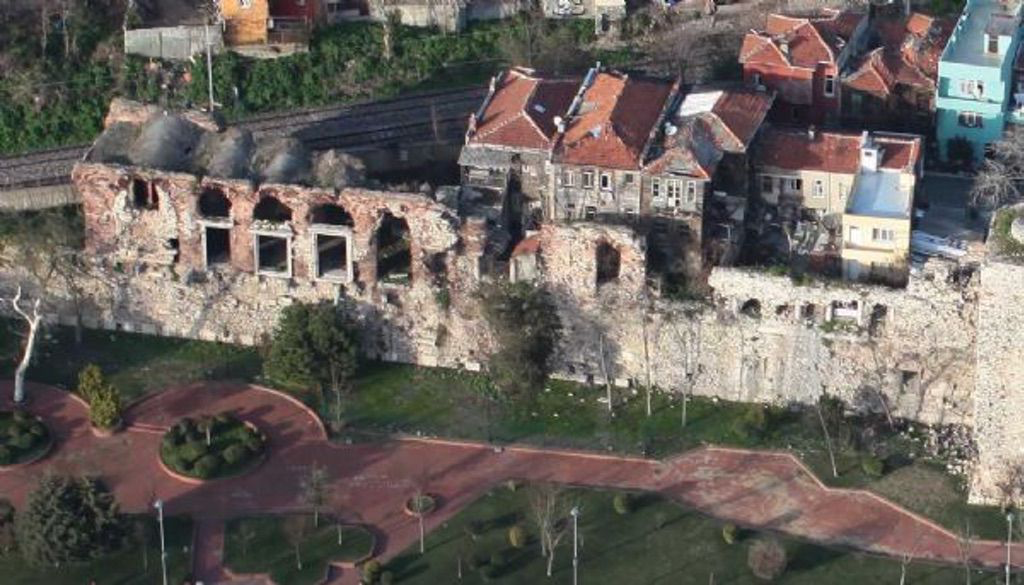
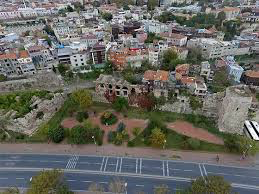
Now compare the reconstructed city with the photographs around Sultanahmet. A modern street can stand close to remains of an earlier capital. This is why these images belong at the beginning of our discussion: the subject is not an entirely remote civilization. It is part of the history of a place we can recognize and visit.
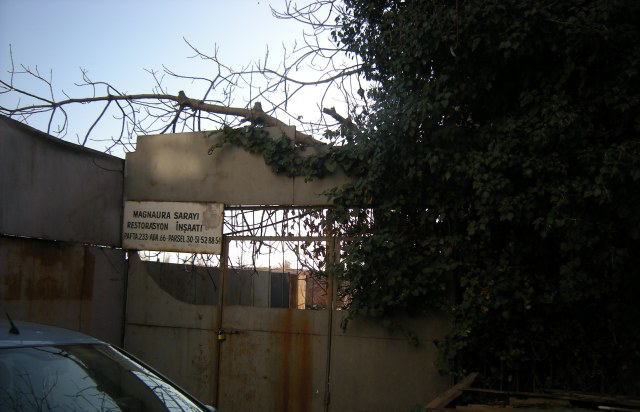
The photographs do not by themselves identify an exact surviving university building. They let us ask a different, useful question: how much of the history of learning remains visible in the city? A wall is easier to notice than a curriculum, a teacher’s explanation or the transmission of a mathematical method. Yet those less visible activities can be just as important in a city’s history.
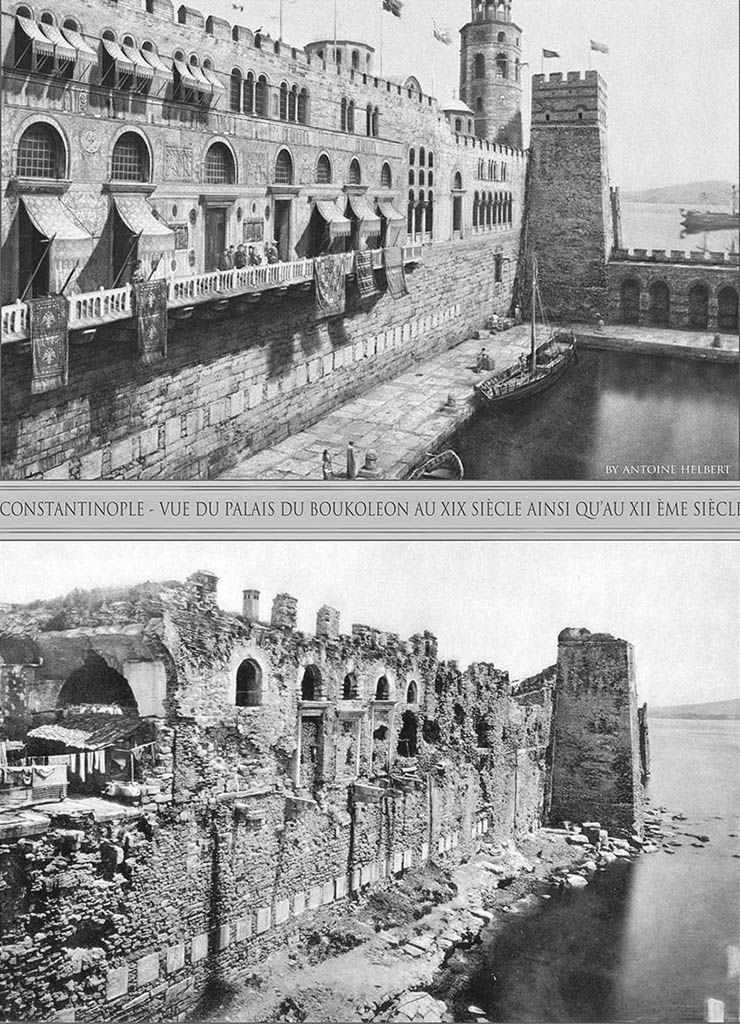
The palace reconstructions help us imagine the setting associated with the Magnaura school. Their completed forms include interpretation as well as surviving evidence. We use them to make the urban context understandable, while keeping the institutional history tied to written and archaeological research.
3. 9th–11th centuries: renewing higher learning
In the ninth century, Bardas supported teaching at the Magnaura, associated with Leo the Mathematician. In 1045, the government of Constantine IX supported new arrangements for law and philosophy. These episodes show repeated efforts to organize advanced learning. The history includes renewals and changes rather than one organization operating without interruption.
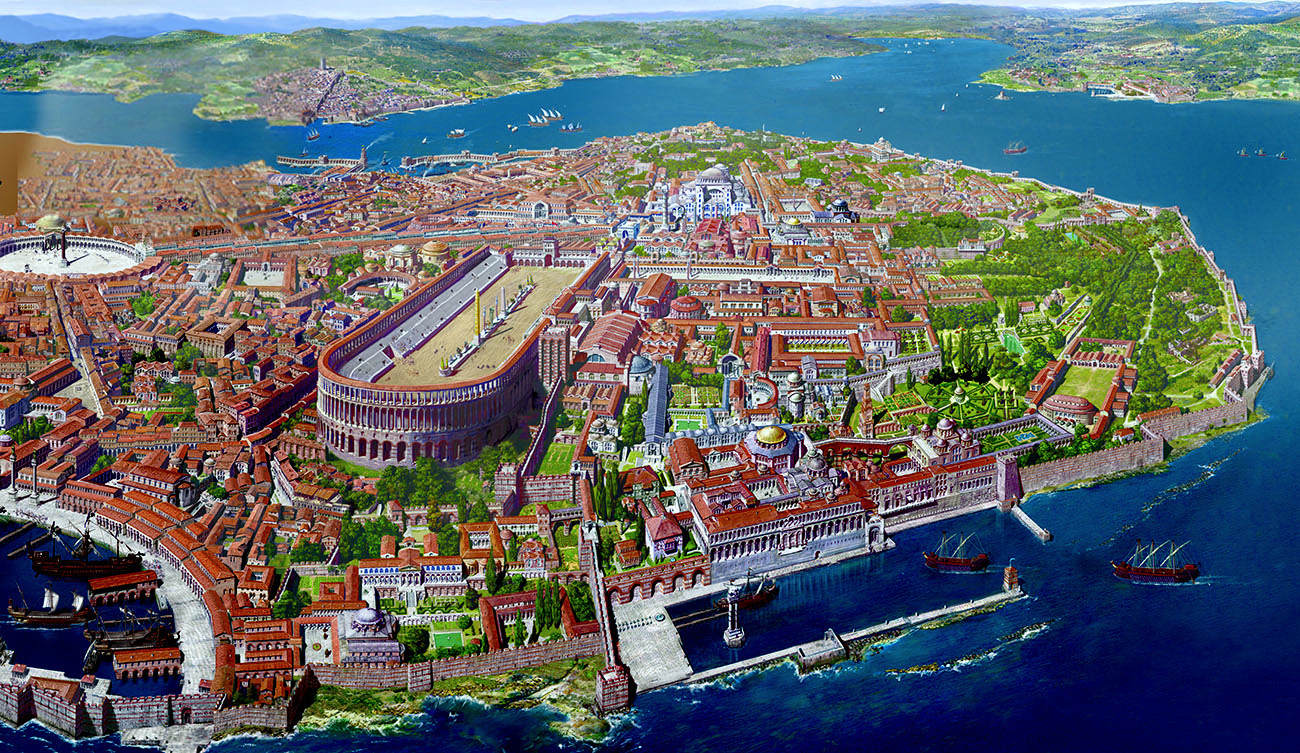
The reconstruction of Istanbul around 1200 gives us an opportunity to imagine an active capital. Officials needed literate colleagues, teachers needed pupils, and people with specialist skills needed a place in the wider economy. Surviving objects and city views help us connect intellectual work with this social setting.
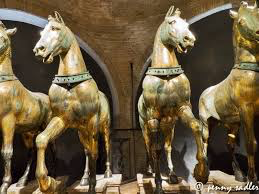
Greek literature and philosophy continued to provide material for advanced study in a Christian empire. Court schools were only part of the picture. Private teaching, church settings and individual scholars also mattered. An intellectual tradition can continue through several forms of institution, even when any one school becomes weaker or disappears.
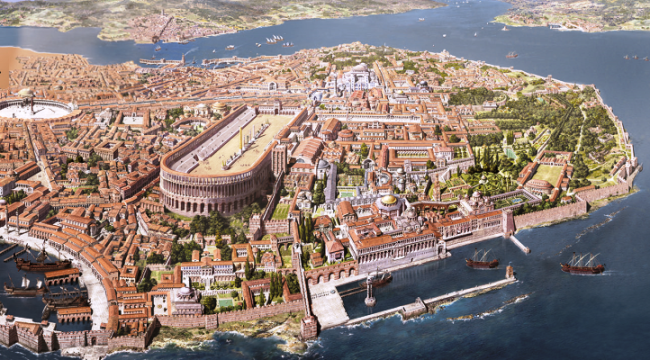
This returns us to the motivation for beginning here. A political decision can create an opportunity for education, but keeping it alive requires continuing work. Who will train the next teachers? Who will preserve and use the books? How will a student gain the skills to contribute? Those questions connect the history of Constantinople with our broader concern about science and society.
4. 1204, 1453 and the changing city
The conquest of 1204 disrupted the imperial capital. Later Byzantine scholars continued higher learning under changed conditions, and the Ottoman conquest of 1453 opened another chapter in the city’s history. We should distinguish the persistence of a learned city from the uninterrupted existence of a single educational organization. Ottoman institutions will receive their own treatment later in the course.
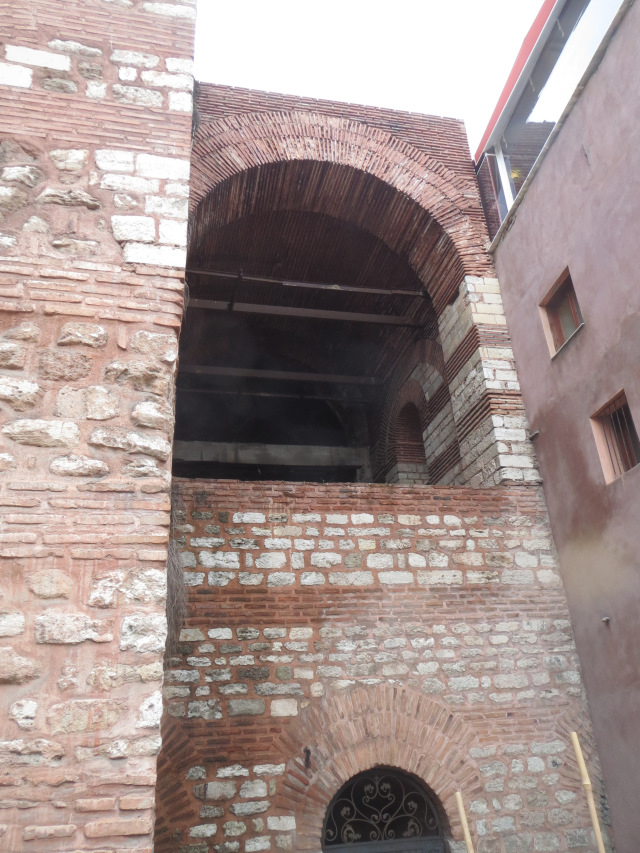
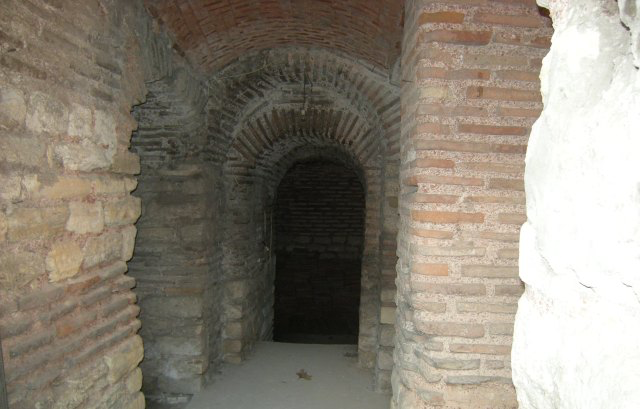
The historical urban photograph, hotel view and Boukoleon images let us follow this question into the visible city. Places acquire new uses. Parts of a building may survive even when the institution that once occupied its surroundings has disappeared. The photographs have different, sometimes unspecified dates, so they should not all be read as views of the present.
Compare the Boukoleon views and consider what later inhabitants chose to preserve, alter or build around. We can ask a similar question about knowledge. Which parts of an intellectual inheritance does a society continue to teach? Which does it leave unused? Physical conservation and the survival of learning are different kinds of work, but both require decisions.
Keep this opening subject in mind as we return to the normal historical sequence. The examples ahead are not only stories about exceptional individuals. They also show what becomes possible when a community provides the conditions for those individuals to learn and work.
5. The chronological route
Imagine that a valuable book has reached your city. Its pages survive, but its language is unfamiliar and some of its diagrams are difficult to interpret. Possessing the book is only the beginning. Someone must read it, understand its argument, teach its methods and decide where those methods work. A manuscript can cross a border more easily than the skills needed to use it.
We now return to the chronological account, beginning with mathematical traditions that connect late antiquity with the medieval world. We will follow Arabic scholarship through the centuries, including a later seventeenth-century example and an eighteenth-century pause before discussing decline. We then return to the overlapping medieval history of Latin Europe. The dates let us compare developments across regions rather than assume that one region’s story replaces another’s.
At each stage, ask what allowed the next person to learn, check and extend earlier work. Our opening example of Constantinople gives that question a concrete institutional setting.
6. 5th–7th centuries: Indian mathematics
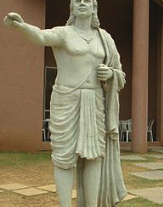
Aryabhata and Brahmagupta connect this lecture with our discussion of ancient calculation. Aryabhata’s Aryabhatiya, composed in 499, brings mathematics and astronomy together. Brahmagupta’s work of 628 includes rules for working with zero and negative quantities. These are important achievements, although some of the rules, particularly those involving division by zero, differ from modern arithmetic. The histories of Aryabhata and Brahmagupta help us distinguish the two scholars.
Consider the difference between 52 and 502. The shape of the digit 5 has not changed, but its position gives it a different value. The zero in 502 marks an empty tens position. That role is conceptually different from asking how zero behaves when we add, subtract or divide. A convenient way of writing numbers and a consistent set of rules for operating on them are related achievements, but they are not the same achievement.
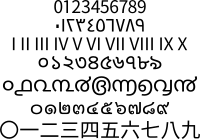
The illustration compares written numeral forms. It reminds us that a mathematical idea can travel while its appearance changes. Users also need procedures, examples and teaching. A symbol does not spread simply because someone declares it superior. People must be able to perform tasks with it, and to trust the results.
7. Practical knowledge in Byzantium
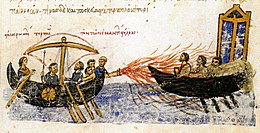
Practical knowledge belonged in this society too. The manuscript image of Greek fire presents a naval technology, not merely an abstract theory. Its use required materials and specialist skills. Yet a picture cannot reveal an exact chemical recipe. We can recognize a technical achievement while remaining precise about what the surviving evidence actually shows.
8. 8th century: Jabir and alchemical traditions
Material techniques offer a related case. Heating, distillation and work with minerals could generate practical expertise. Alchemical texts also pursued explanations and goals that differ from modern chemistry. The writings attributed to Jabir ibn Hayyan have a complicated history of authorship and dating, as discussed in Encyclopaedia Iranica’s account of alchemy. We should therefore avoid assigning a long catalogue of “first discoveries” to one securely known individual.
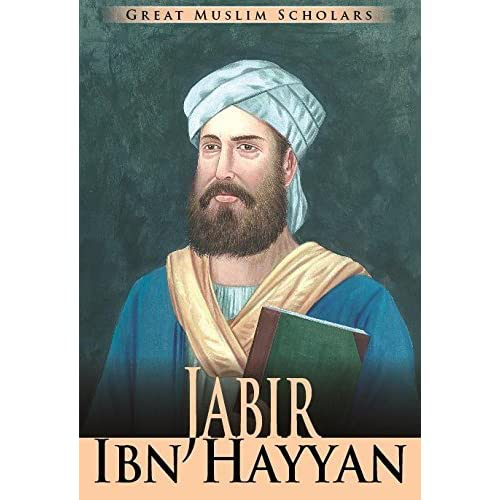
The later portrait of Jabir is useful as an image of remembrance. It is not direct evidence of what he looked like. This distinction also applies to several statues and portraits elsewhere in the lecture.
9. 8th–9th centuries: translation and patronage
When we turn to scholarship written in Arabic, we are moving across a large and varied world. Arabic served as a scholarly language for people of different religions and backgrounds. “Islamic science” is a useful historical label for a setting, but it should not imply that every contributor was Muslim or that all work took place under one dynasty.
Translation required far more than finding equivalent words. A translator of medicine or mathematics had to understand the subject. A damaged manuscript might need comparison with another copy. A technical expression might need explanation. Hunayn ibn Ishaq and his collaborators helped make Greek medical learning available through Syriac and Arabic. The National Library of Medicine’s manuscript account connects these translations with subsequent medical teaching.
Baghdad under Abbasid patronage became an important centre. Rulers and other patrons could commission texts and support scholars. But useful work also depended on teachers, households and professional contacts. The familiar name “House of Wisdom” should not lead us to put the whole translation movement inside a single building resembling a modern research university.
Preserving a text and transforming its use could occur together. A reader might respect an earlier authority while finding a gap, proposing a correction or applying a method to a different problem. That is why translation belongs inside the history of intellectual production, rather than appearing only as a delivery service between more supposedly creative periods.
10. 9th century: al-Khwarizmi and algebra
Al-Khwarizmi gives us a concrete example of mathematical organization. His ninth-century algebra explained procedures for solving types of equations. Problems involving inheritance or measurement made this work useful, but a general procedure could reach beyond any one application. The MacTutor account describes both that practical purpose and the verbal form of his mathematics.
Let us try one example using modern notation: x² + 10x = 39. Add 25 to each side. The left side becomes (x + 5)² and the right side becomes 64. For a positive length, x + 5 = 8, so x = 3. Substitution checks the result: 9 + 30 = 39.
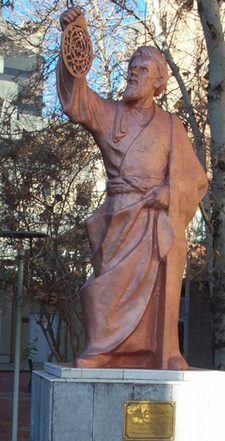
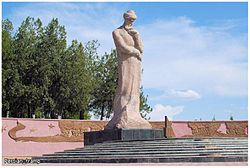
The symbols make the steps compact for us, but the historical work expressed its reasoning in words and used geometry to justify procedures. Our notation is an explanatory aid, not a reproduction of the manuscript. The important lesson is the combination of a repeatable method with a reason for accepting it. The statue commemorates the scholar much later and should be read as a monument, not a contemporary portrait.
11. 9th century: al-Kindi and Thabit
Al-Kindi’s wide interests remind us that the boundaries between fields were different from ours. His work joined philosophy with mathematical inquiry. A manuscript page associated with his cryptanalysis illustrates an intriguing application: examining regularities in language to investigate a coded message. The Stanford account of al-Kindi places his work within a broader philosophical and scientific programme.
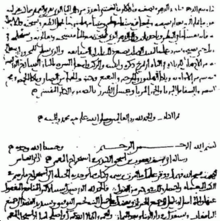
Frequency analysis makes an inference from patterns. A frequently repeated sign may correspond to a frequently used letter, but that is a hypothesis to test. A short text may have an unusual vocabulary. Patterns guide investigation without guaranteeing a correct answer.
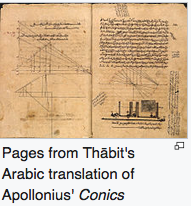
Thabit ibn Qurra, from Harran, worked on translation and mathematics in Baghdad. The page associated with his Arabic translation of Apollonius makes an important point visible: diagrams are part of the argument. Someone translating such a work must follow the mathematics. See MacTutor on Thabit for the connection between his translations and investigations.
For a small arithmetic example, consider 220 and 284. Add the proper divisors of 220 and the result is 284. Add the proper divisors of 284, namely 1, 2, 4, 71 and 142, and the result is 220. Such numbers are called amicable. The pair predates Thabit, whose work concerned a method for finding pairs. The example distinguishes noticing a curiosity from developing a more general mathematical procedure.
12. 9th–11th centuries: medicine
Medical writing could bring together observations made at different times and in different places. Al-Razi used earlier learning and clinical experience, while Ibn Sina’s Canon organized a large body of medical knowledge. Translation and copying helped such works influence later readers. The National Library of Medicine’s overview explains this combination of inheritance and new medical writing.
An influential book is not the same thing as a completely reliable treatment manual. Historical importance concerns what a work enabled and how people used it. Modern evidence determines whether a particular treatment is effective today. Keeping those questions separate lets us respect an achievement without treating every old claim as established.
13. 10th century: ways of calculating
The tenth-century examples show several systems in use at the same time. Finger reckoning, sexagesimal calculation and Indian decimal methods served different users and tasks. A system familiar to an astronomer need not have been the method most convenient to a merchant.
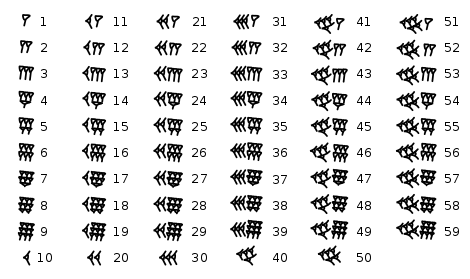
Al-Uqlidisi’s work helped adapt decimal calculation to writing on paper. The MacTutor biography explains why a procedure suited to a dust board needed modification for another writing surface. The material on which people calculate can influence the procedure itself.
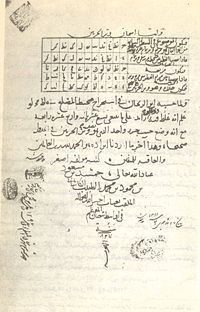
Changing a notation also means changing habits. A teacher must make the method understandable, users must trust its results, and worked examples must show how to handle real problems. The numeral chart therefore represents more than a set of shapes: it points toward a history of practical learning.
14. 11th–12th centuries: Khayyam, geometry and calendars
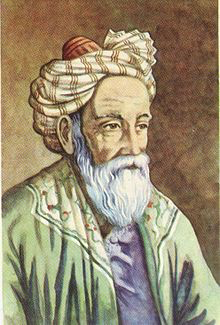
Omar Khayyam’s mathematical work and participation in calendar reform connect abstract investigation with institutional support. Geometry offered methods for studying cubic equations. Calendar work required sustained attention to the heavens and a setting in which skilled people could work. The MacTutor biography describes these activities without reducing his life to the later reputation of his poetry.
An observatory is easier to understand if we think about a complete working process. People need instruments and the skill to operate them. They record observations, calculate relationships and compare results. A table then makes some of this work accessible to another user, who does not have to repeat every observation from the beginning.
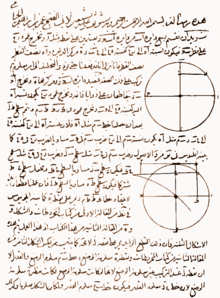
Astronomy also served calendar keeping, timekeeping and the determination of directions. The Metropolitan Museum’s discussion connects scientific work with instruments and wider cultural practices. Some historical uses involved astrology as well. We can explain why people pursued a subject without endorsing every belief connected with it.
The institutional point matters throughout this course. Even a gifted individual needs access to materials and earlier results. A programme that lasts for years requires arrangements that help knowledge survive changes of personnel.
15. 12th century: continuing mathematical inquiry
Khayyam’s work did not close the subject of algebra. Al-Samawal developed methods involving polynomials and powers. Sharaf al-Din al-Tusi investigated cubic equations and the conditions under which solutions exist. These are examples of continuing inquiry into problems that earlier scholars had also studied.
For this cultural course, the central point is the development of a mathematical conversation across generations. A question can remain productive because a later scholar changes the method or asks more precisely when an answer is possible. The university biographies of al-Samawal and Sharaf al-Din al-Tusi provide further detail.
16. 13th century: al-Jazari and mechanisms
The Banu Musa and al-Jazari show how ingenious devices could combine moving parts with the controlled behaviour of water. Al-Jazari completed his book in 1206 in the Artuqid setting of northern Mesopotamia. The Metropolitan Museum’s manuscript record provides an example of the tradition in which descriptions and pictures make a mechanism understandable to another reader.
When an arrangement produces an action without a person directing every stage, we can speak of automation. The mechanism still needs an energy source, careful construction and maintenance. The word “robot” may help a modern audience make a connection, but it can also import expectations about computers and artificial intelligence that do not belong to the device.
17. 14th–15th centuries: Samarkand
Ulugh Beg was born in 1394, in the fourteenth century, but his observatory programme at Samarkand belongs to the fifteenth. It is useful to keep those two dates distinct. A scholar’s birth century is not necessarily the period of the achievement we are studying.
Fifteenth-century Samarkand supplies such evidence. Ulugh Beg supported an observatory and mathematical scholarship there, long after 1258. Al-Kashi’s work included decimal-fraction methods and highly accurate computation of pi. These examples show continuing ambitious work, rather than a universal cessation. Read more in the accounts of Ulugh Beg and al-Kashi.
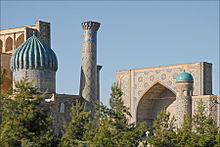
An observatory required sustained cooperation. Patronage supplied opportunities, while calculation, instruments and trained people made those opportunities useful. Al-Kashi’s work illustrates how much depended on reliable mathematical procedures as well as material resources.
Hold on to this fifteenth-century example when we reach the question of decline. It will help us test broad explanations against a particular centre in a particular period.
18. 15th century: mathematical notation
Al-Qalasadi used abbreviated signs in mathematical writing. His work belongs to a longer history of notation, rather than the sudden invention of all algebraic symbolism. The MacTutor account of al-Qalasadi explains why claims of a single inventor are misleading.
A shorthand becomes useful when readers share its meaning. It can make repeated operations easier to follow, but it also requires teaching. This connects mathematical notation with the lecture’s larger theme: knowledge becomes more durable when other people can learn how to use it.
19. 17th century: Muhammad Baqir Yazdi
We follow the mathematical thread forward to Muhammad Baqir Yazdi. He completed ʿUyun al-hisab in 1637. His work includes the amicable pair 9,363,584 and 9,437,056. The definition is the same one we used for 220 and 284: each number equals the sum of the other number’s proper divisors.
This brings us back to Thabit and the long life of a mathematical problem. The TDV İslâm Ansiklopedisi account by İhsan Fazlıoğlu places Yazdi within the inherited mathematical tradition. We do not need to memorize the large pair. Its purpose here is to show continuing work before the next chronological pause.
20. 18th Century
21. Decline: the question after the pause
The empty century marker is a deliberate pause. After a sequence filled with people and examples, the absence of another named achievement makes us stop. What has changed? Why does scientific activity appear so much stronger in some periods and places than in others?
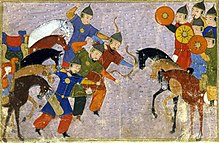
The contrast opens a discussion; it cannot by itself establish that nothing happened anywhere in an entire century. We need to identify the field and place under discussion, then ask what happened to teaching, patronage and opportunities for inquiry. Our opening example of Constantinople reminds us why these institutional questions matter.
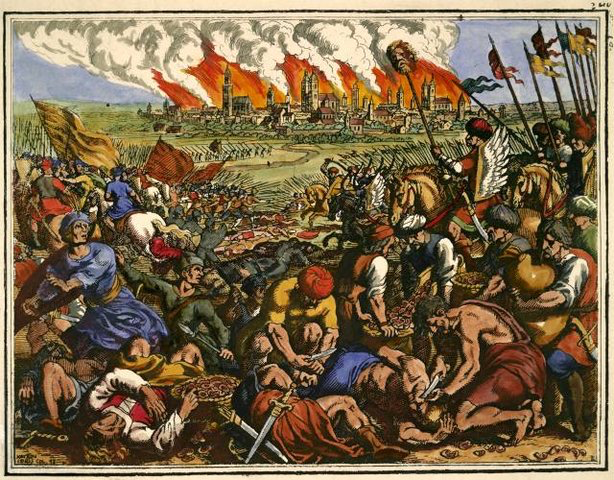
The destruction of Baghdad in 1258 was a major event. It does not provide a sufficient end date for scientific activity throughout the Islamic world. To assess an explanation of decline, we need to specify a place, a field and a period. We should also look for evidence that challenges the proposed explanation.
War and political disruption are serious parts of an explanation. Yet the fifteenth-century work at Samarkand, and the later example of Yazdi, prevent us from treating Baghdad’s destruction as a universal stopping point. An explanation should account for both disruption and continuing work.
Consider which decisions help science prosper, and which conditions make it difficult to sustain. This question connects the chronological contrast with the opening motivation of the lecture. A good discussion makes a claim about particular institutions or practices and then identifies the evidence needed to test it.
22. Paper, craft and everyday technology
Papermaking offers a different kind of enabling technology. It developed in China and spread through connected regions. UNESCO’s account of the Silk Roads emphasizes networks through which techniques travelled. A workshop required people who knew the process and could obtain suitable materials. Repeating one battle story as the complete explanation would hide this longer process.
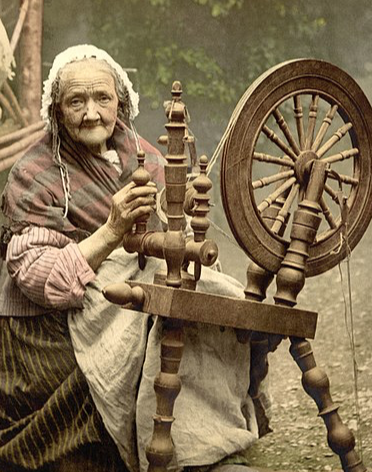
More available writing material could support books and records, but copying still demanded labour and literacy. A material improvement creates possibilities. Institutions and users determine how far those possibilities develop.
Less spectacular technologies deserve attention too. Mills could turn water or wind into useful work. A spinning wheel coordinates a mechanism with skilled human movement. Clocks and spectacles changed particular activities. Such improvements remind us that technology could develop through craft experience without waiting for a new general scientific theory.
23. 12th–13th centuries: Latin learning and universities
We now return to an overlapping medieval chronology in Latin Europe. This is a change of region, not a claim that the developments we have just followed had stopped elsewhere.
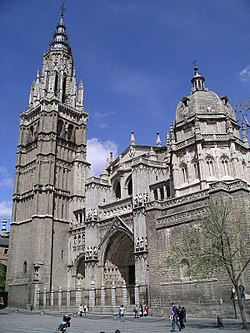
Toledo provides a recognizable location for the translation of Arabic scientific and philosophical works into Latin from the twelfth century. Translation drew on people with different linguistic and religious backgrounds. We should imagine a range of collaborations over time, rather than a single modern translation office. The university-hosted history of scientific translation discusses these working relationships.
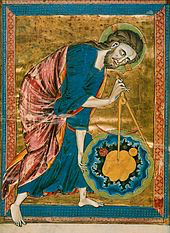
The resulting books did not contain only recovered Greek antiquity. They also conveyed work developed in Arabic. Readers encountered methods and arguments that had already passed through editing, criticism and extension. This helps explain why translation could reshape a curriculum.
Latin universities became communities with teaching arrangements and recognized qualifications. Bologna’s own institutional history treats 1088 as a conventional date within a longer development. That is a useful warning against assuming that every major institution began in a single, clearly documented founding moment.
Natural philosophy and medicine gave students organized subjects to study and debate. Yet higher learning elsewhere had different institutional forms. The meaningful comparison concerns what those institutions enabled: training, discussion, continuity and access. It need not depend on awarding one place a universal title of “first.”
24. 14th century: anatomy and motion
The anatomy illustration presents a lesson with distinct roles. Someone reads or explains, someone demonstrates and others observe. Medieval medical teaching combined texts with practical activity, including anatomical dissection in settings such as Bologna. Mondino’s fourteenth-century anatomy text became influential. The image invites us to ask how observation and written authority interacted within teaching.
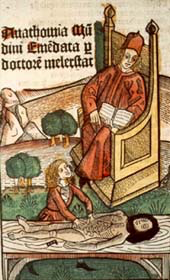
Scholastic commentary could involve careful objections and alternative explanations. Buridan’s account of impetus addressed a familiar difficulty: why does a projectile keep moving after it leaves the thrower? His explanation belongs to a medieval framework and differs from Newton’s later mechanics. The Stanford account helps preserve that distinction.
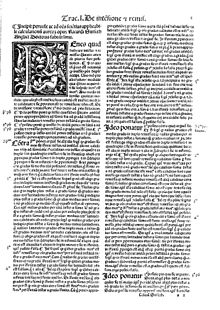
The Oxford Calculators, associated particularly with Merton in the fourteenth century, explored change through mathematical reasoning. Merton’s history of mathematics records their contribution to kinematics. Such work widened the possibilities for comparing motion before the later experimental mechanics we will discuss in Lecture 4.
Here is a modern illustrative calculation. Suppose speed increases uniformly from zero to 10 metres per second over four seconds. Average speed is five metres per second, so the distance is 20 metres. The important word is uniformly. If the speed rises quickly at first, or only near the end, the same starting and ending speeds can produce a different distance.
The arithmetic is simple, but the reasoning is valuable. We have identified an assumption that makes a conclusion possible. That habit connects our historical examples with the broader question of what counts as a justified claim.
25. Travellers and routes
Travel and commerce helped connect distant places, although contact was neither continuous nor peaceful. Some routes became easier to use under Mongol rule, while conquest caused terrible destruction. Both observations belong in the same history. A map of travellers gives us an image of movement, but a particular travel report still needs critical reading.
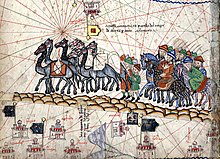
26. 13th–15th centuries: exchanges and 1453
Byzantium did not function only as a storehouse from which Greek texts moved west. Gregory Chioniades studied Persian astronomy and translated material into Greek around the turn of the fourteenth century. The Iranica discussion of Byzantine-Iranian relations describes this movement of learning back toward Byzantium. It makes the idea of a simple one-way chain difficult to sustain.
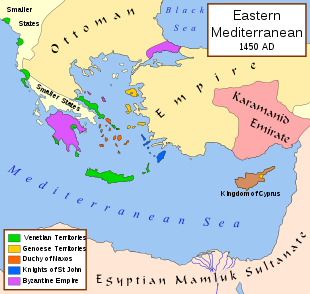
By the fifteenth century, Greek scholars and manuscripts also contributed to Italian learned culture. The fall of Constantinople in 1453 belongs within this history, but contacts and movement had already begun. We should not make one political event responsible for the whole Renaissance.
The map labelled 1450 gives a political snapshot near the end of our period. Scholarship had a different geography from borders alone. People could work across languages and move between patrons. Lecture 4 will follow printing, new observations and arguments over authority within this world of overlapping continuities and changes.
27. Patronage and the conditions for inquiry
Consider an invented case: a ruler funds a well-equipped observatory but restricts the circulation of its results. What improves, and what remains fragile? Begin by separating resources from the practices through which knowledge becomes useful to a wider community.
Funding can provide salaries, instruments and time. It may allow observations that would otherwise be impossible. Restricted circulation, however, makes independent checking and wider teaching harder. Dependence on one patron may also leave the programme vulnerable to a political change. A strong answer recognizes both the immediate opportunity and the conditions needed for lasting work.
For review, explain how translation could create knowledge. Thabit provides one example: understanding and editing mathematical arguments required active judgment, and translation could support further investigation. Then explain why numeral systems coexisted. Different users had different tasks and familiar methods, so adoption did not follow an instant universal replacement.
Finally, use Samarkand to test the claim that scientific work ended in 1258. Its fifteenth-century astronomy contradicts that universal claim. It does not erase Baghdad’s destruction. It shows why we must distinguish a local catastrophe from the history of many regions and fields.
The medieval contribution becomes clearer when we see the work involved in sustaining knowledge. People copied and taught, but they also questioned, calculated and made things. The survival of an idea often depended on repeated acts of understanding by people who lived far from its earliest authors.
28. Reference: representations and practical learning
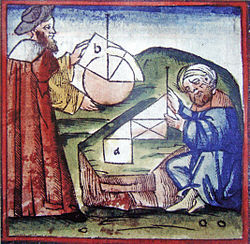
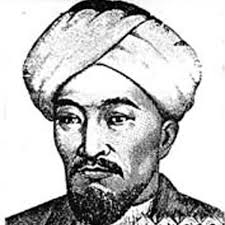
The later portrait of al-Kindi and the map of Harran serve different purposes. One commemorates a scholar, while the other locates a place associated with Thabit. The manuscript image linked with Khayyam introduces a third kind of evidence: a mathematical argument in which a diagram matters. These distinctions help us avoid using every historical image in the same way.
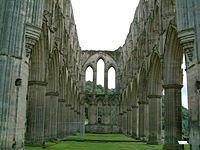
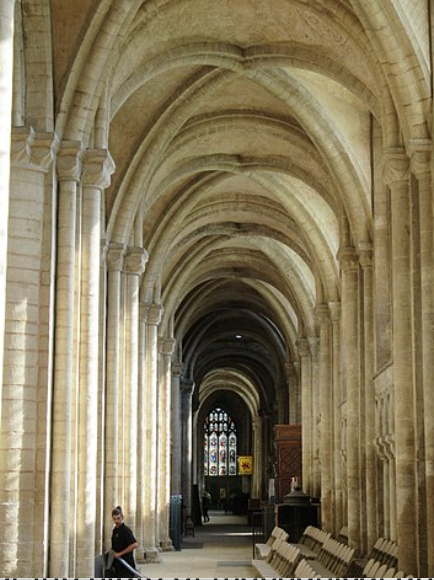
Architectural photographs connect geometry with craft. A vaulted interior required judgments about materials and construction as well as form. Church ruins can open a discussion of institutions and labour. They do not, by themselves, establish the operation of a particular furnace or the date when a technique first appeared.
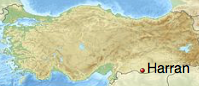
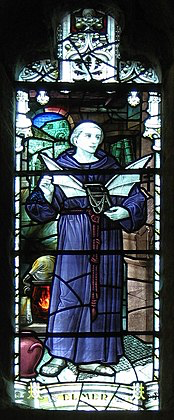
The Eilmer story offers an optional case about curiosity and the evidence for failed attempts. A medieval account describes a flight attempted with attached wings and resulting injuries. The stained-glass image is a later representation. We can examine the story’s meaning without pretending that its reported distance is a measurement made under modern experimental conditions.
29. Sources and further reading
The links throughout this reading provide routes into university histories, specialist scholarship and museum or library collections. The historical images also deserve examination as objects in their own right. A modern portrait, a manuscript page and a reconstruction answer different kinds of questions.
For mathematics, consult the University of St Andrews MacTutor biographies linked above. For medical manuscripts, use the US National Library of Medicine collections. The Metropolitan Museum provides object records and an introduction to astronomy in the medieval Islamic world. The Stanford Encyclopedia of Philosophy supplies detailed treatments of al-Kindi and Buridan. These resources extend the examples without requiring you to memorize a catalogue of names.
Our aim is to explain relationships: how a method becomes teachable, how an institution supports inquiry and how evidence constrains a historical claim. Those questions will remain useful when the course moves into the Renaissance and Scientific Revolution.